
By Joseph Zarycki
A test stand usually gets built under a deadline. Somebody needs numbers by a certain date, the stand gets stood up, it passes a few known parts, and everyone moves on. Then six months later a new operator is running it, a reading looks off, and nobody can remember why the limit was set where it was. That gap is the part of a handoff people skip, and in my years as a test automation engineer in Cleveland, it’s the part I’ve seen decide whether the stand is still worth anything a year out.
The stand works, but can the next person run it?
When we hand off a stand, the question we care about isn’t just whether it passes good parts today. It’s whether someone who has never seen it can sit down, run a part, and know what the result means. If the only person who understands the setup is the person who built it, the project isn’t really finished. You’re one resignation away from a stand nobody can run.
Write down why the limits are what they are
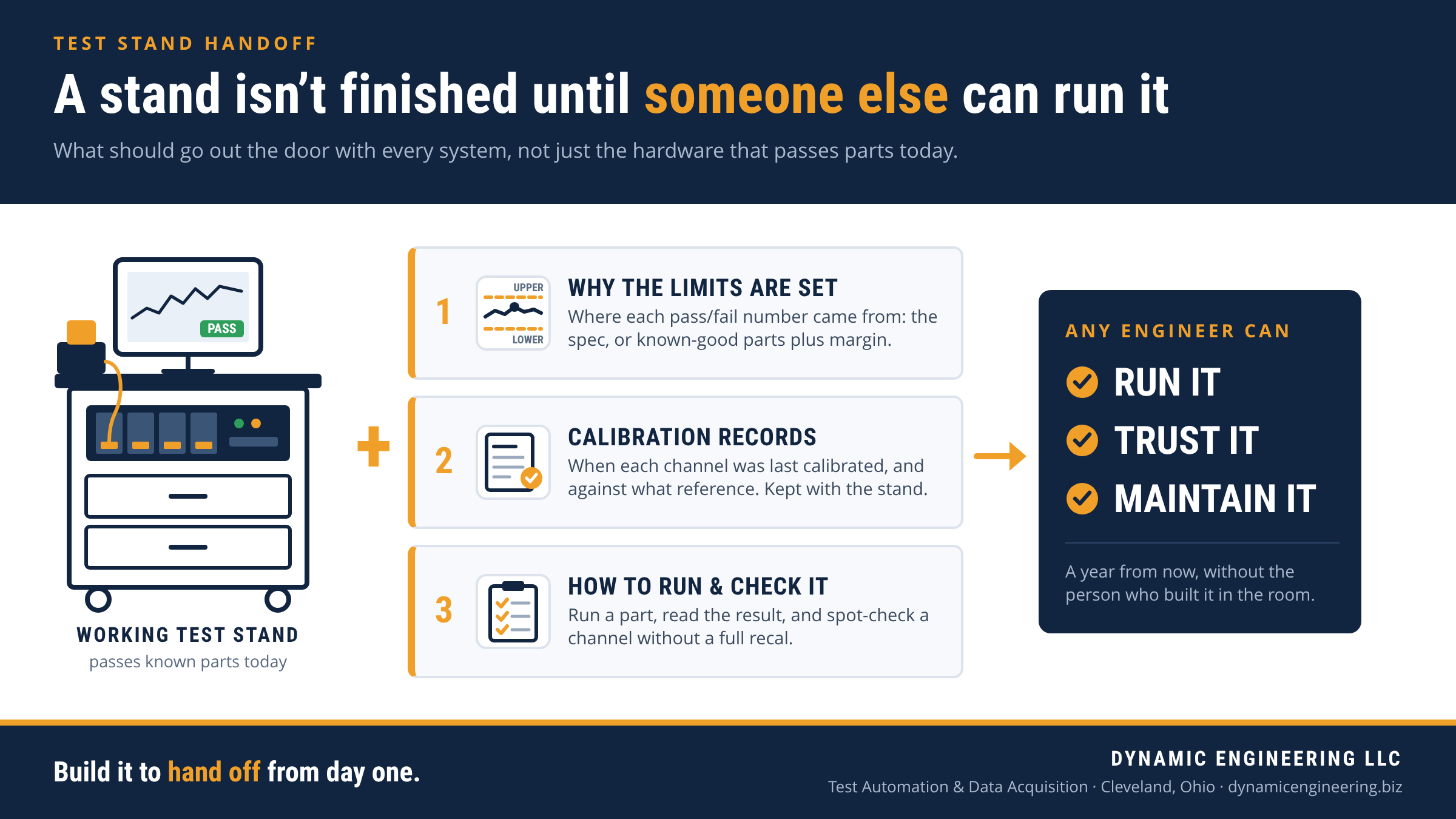
A pass/fail limit is a decision, and decisions have reasons. Maybe the upper limit comes straight from a spec. Maybe it came from testing a batch of known good parts and leaving some margin. Either way, write down where the number came from. When a part fails next year and someone asks whether the limit is too tight, the answer should be in the documentation, not in one person’s head. Same goes for the measurement itself. If a channel reads torque but the thing you actually care about is whether a clutch slips, say so somewhere.
Keep the calibration records with the stand
A measurement is only as good as the calibration behind it. Every sensor and signal path drifts over time, so the stand needs a record of when each channel was last calibrated and against what reference. We keep that traceability with the stand, plus a simple way to check a channel without a full recal, so an operator can catch a problem before it ships bad data. When those records live in a drawer across the building, they may as well not exist.
Build it to hand off from the start
A good handoff comes down to understanding what the measurement is for, then building the stand and the paperwork around that. At Dynamic Engineering in the Cleveland area, that’s how our team approaches every system we build, and because we’re small and quick to respond, we’re still around afterward when you need us. If you need a test automation engineer in Cleveland for a system you can actually hand off and keep running, get in touch with us. You can also read more about Joseph Zarycki and the background behind the work.