Tag: Data Acquisition
-
Why When You Measure Matters as Much as What You Measure
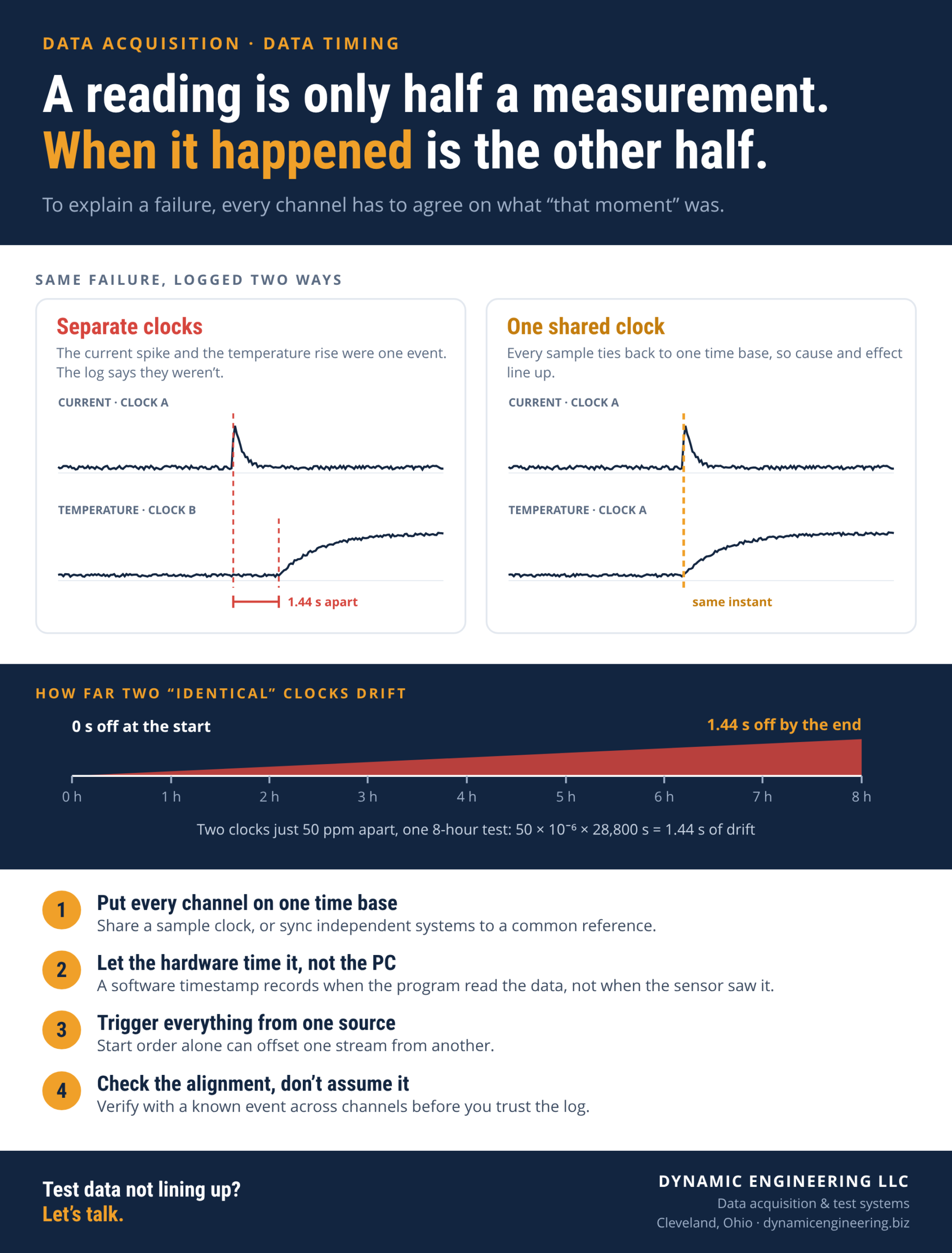
A clean reading at the wrong moment can still give you the wrong answer. Why data timing and alignment decide whether a test result means anything. Read more
-
Ground Loops: Why One Bad Ground Wrecks a Measurement
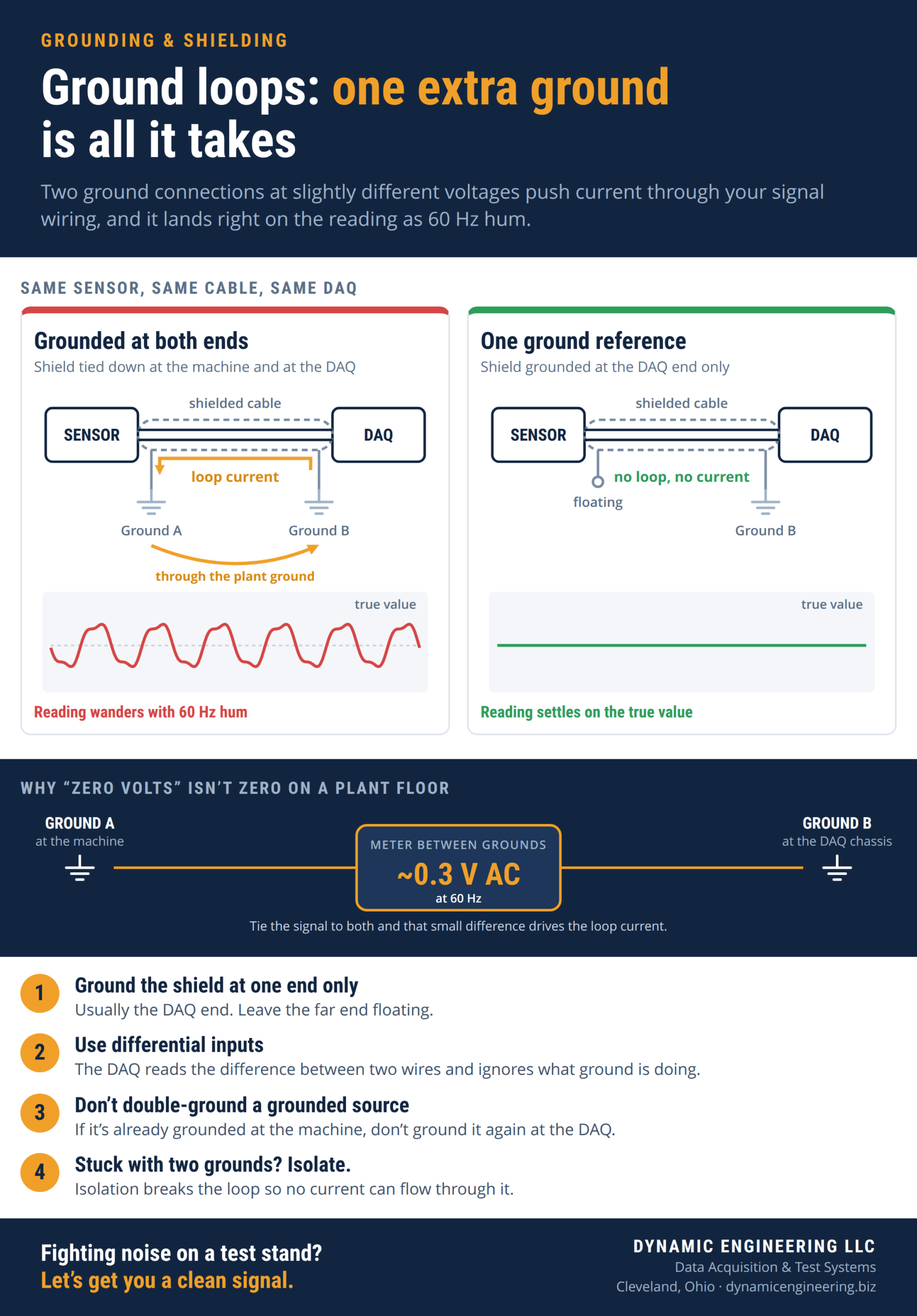
A ground loop is two ground connections at slightly different voltages, and it puts noise right on your signal. Here’s how to spot one and shut it down. Read more
-
What Signal Conditioning Actually Does Before Your DAQ Sees It
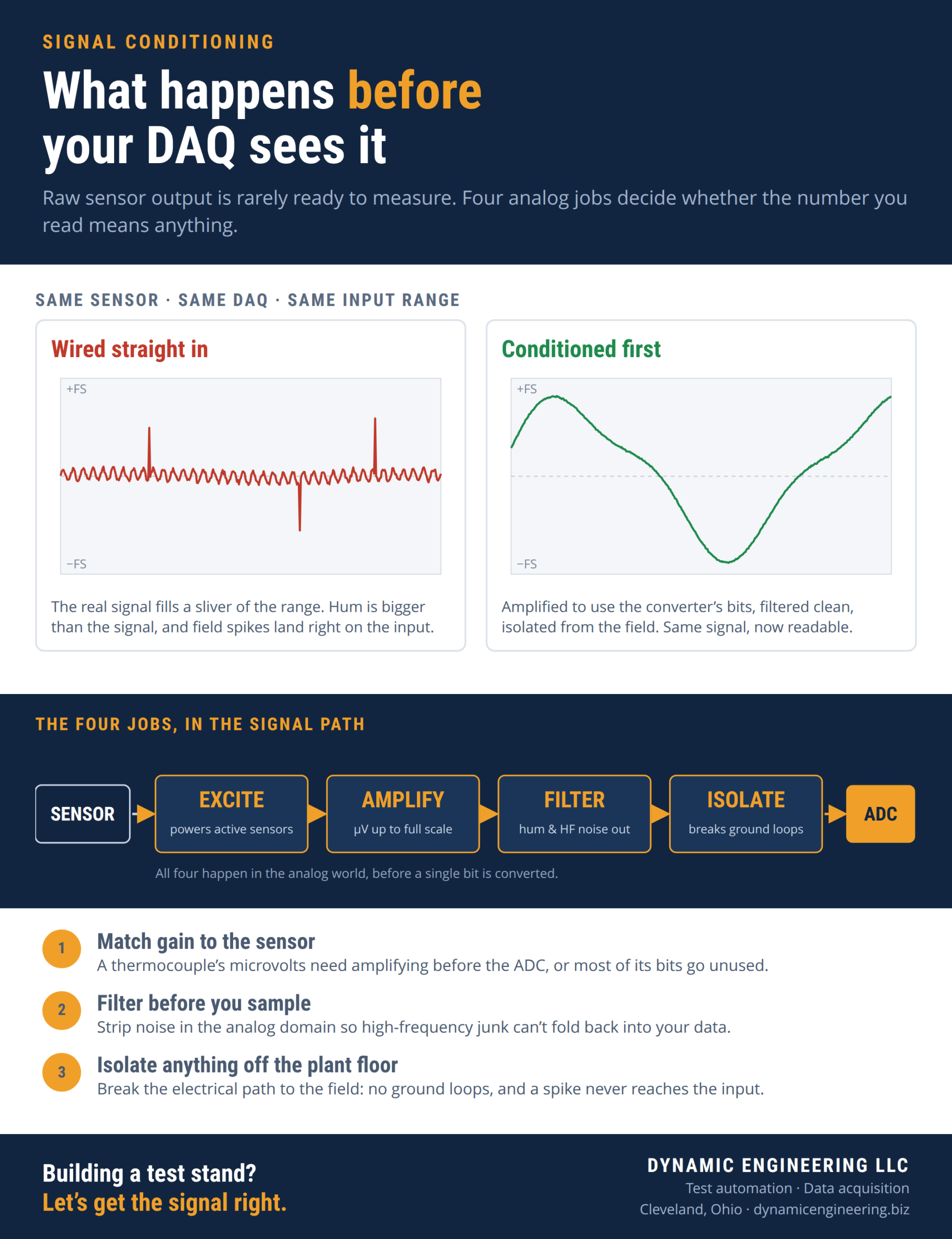
Raw sensor output is rarely ready to measure. Here is what signal conditioning does, amplify, filter, isolate and excite, before your DAQ digitizes it. Read more
-
Why a Producer Consumer Loop Keeps LabVIEW From Dropping Data
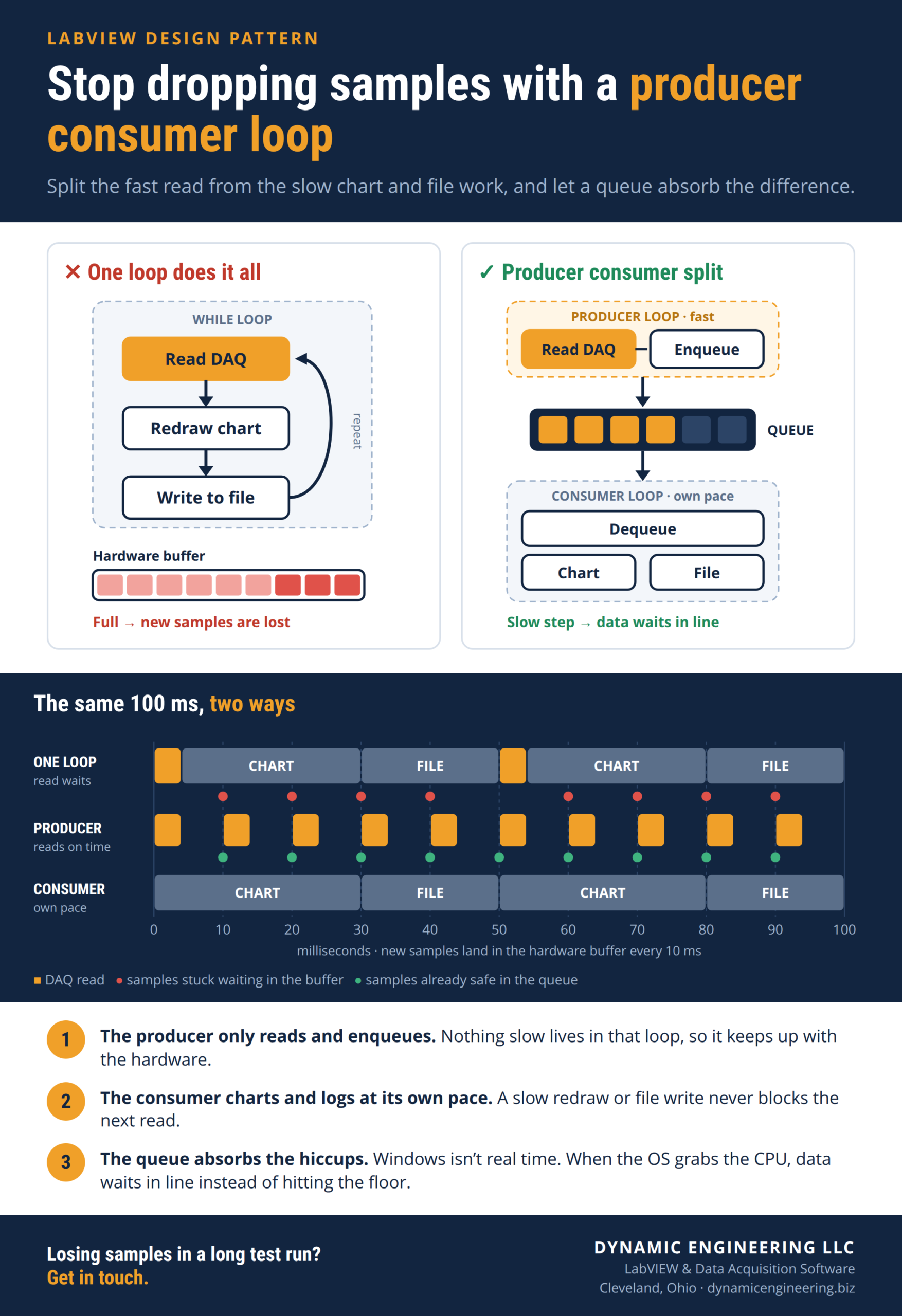
A slow chart or log should not cost you samples. Here is how a producer consumer loop in LabVIEW keeps your data acquisition from dropping data. Read more
-
Why You Need an Anti-Aliasing Filter Before Sampling
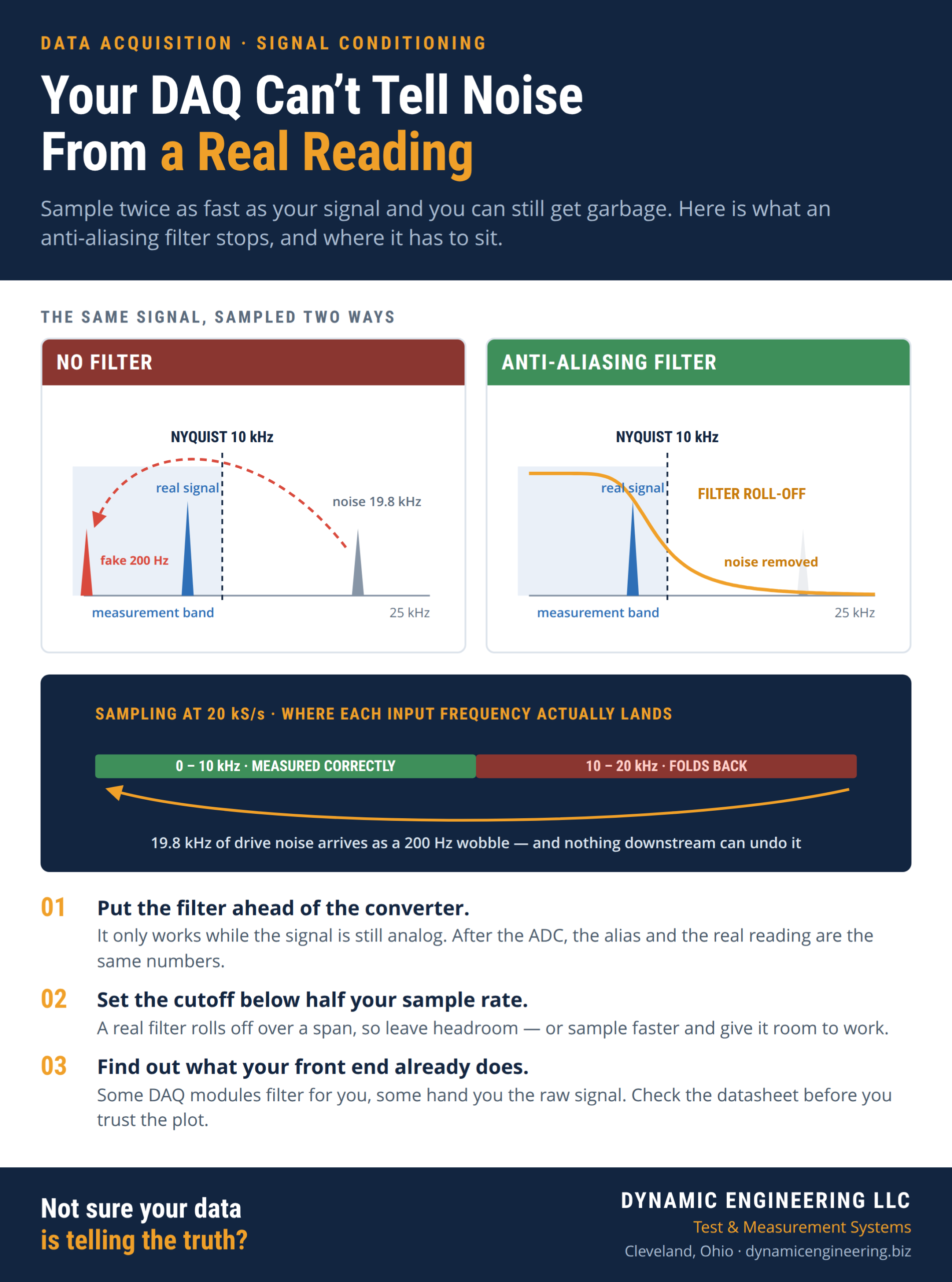
An anti-aliasing filter strips high frequencies before your DAQ samples the signal. Skip it and noise folds in as a fake reading you can’t undo. Read more
-
Resolution vs Accuracy: Why More Bits Isn’t Everything

Resolution vs accuracy: they aren’t the same thing. Here’s why a 24-bit DAQ can still give you a wrong reading, and what to check instead. Read more
-
Why Thermocouples Need Cold Junction Compensation
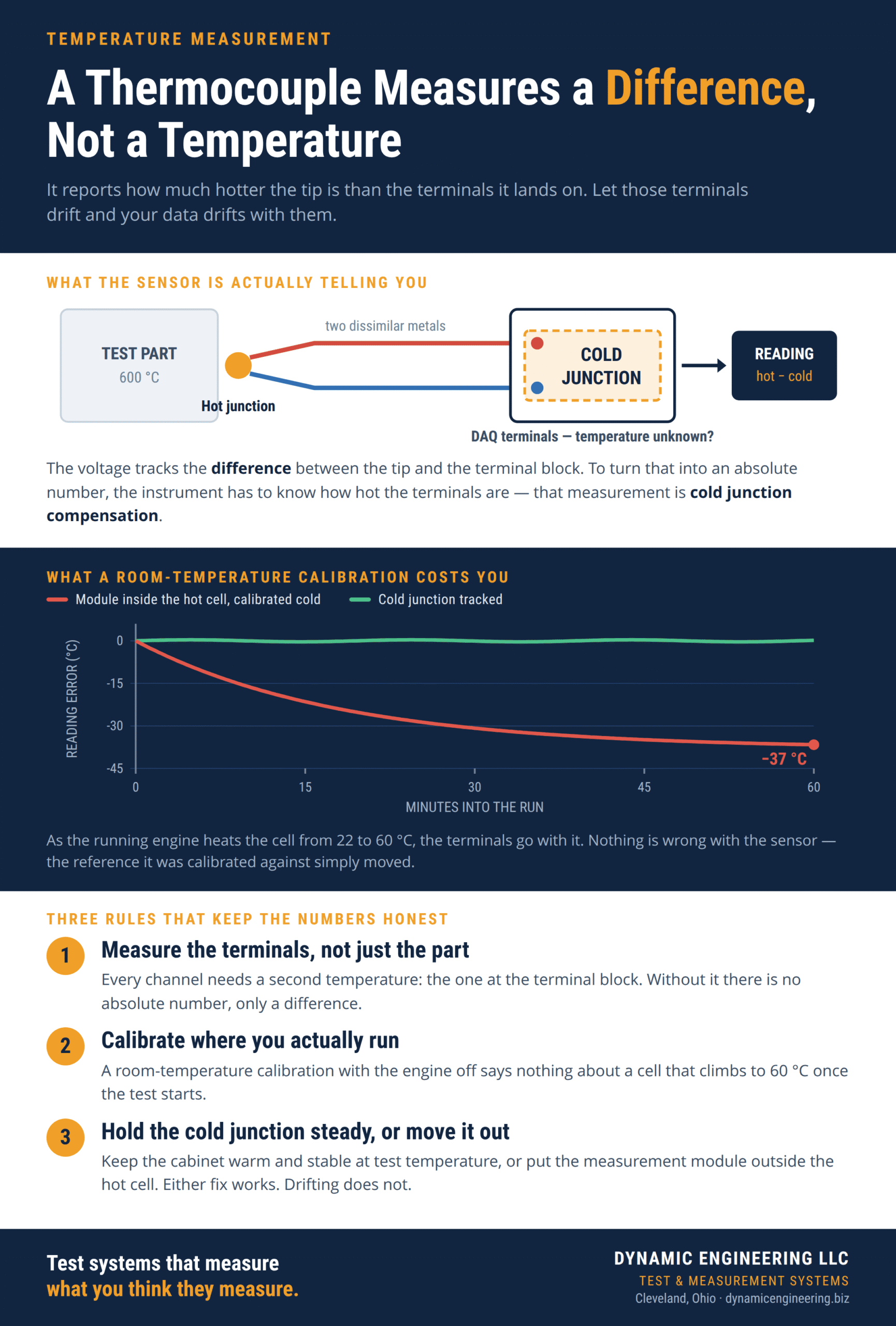
A thermocouple reads a temperature difference, not an absolute number. Here’s a real test cell story on why cold junction compensation matters. Read more
-
cRIO vs cDAQ: When to Reach for Each
If you’ve ever spec’d out a National Instruments system, you’ve hit this fork in the road. Both platforms take the same C Series modules. Both measure the same signals. So why do they cost so differently, and which one does your job actually need? The short version A cDAQ needs a computer. It’s built to… Read more
-
Differential vs Single-Ended Analog Inputs, and When It Matters
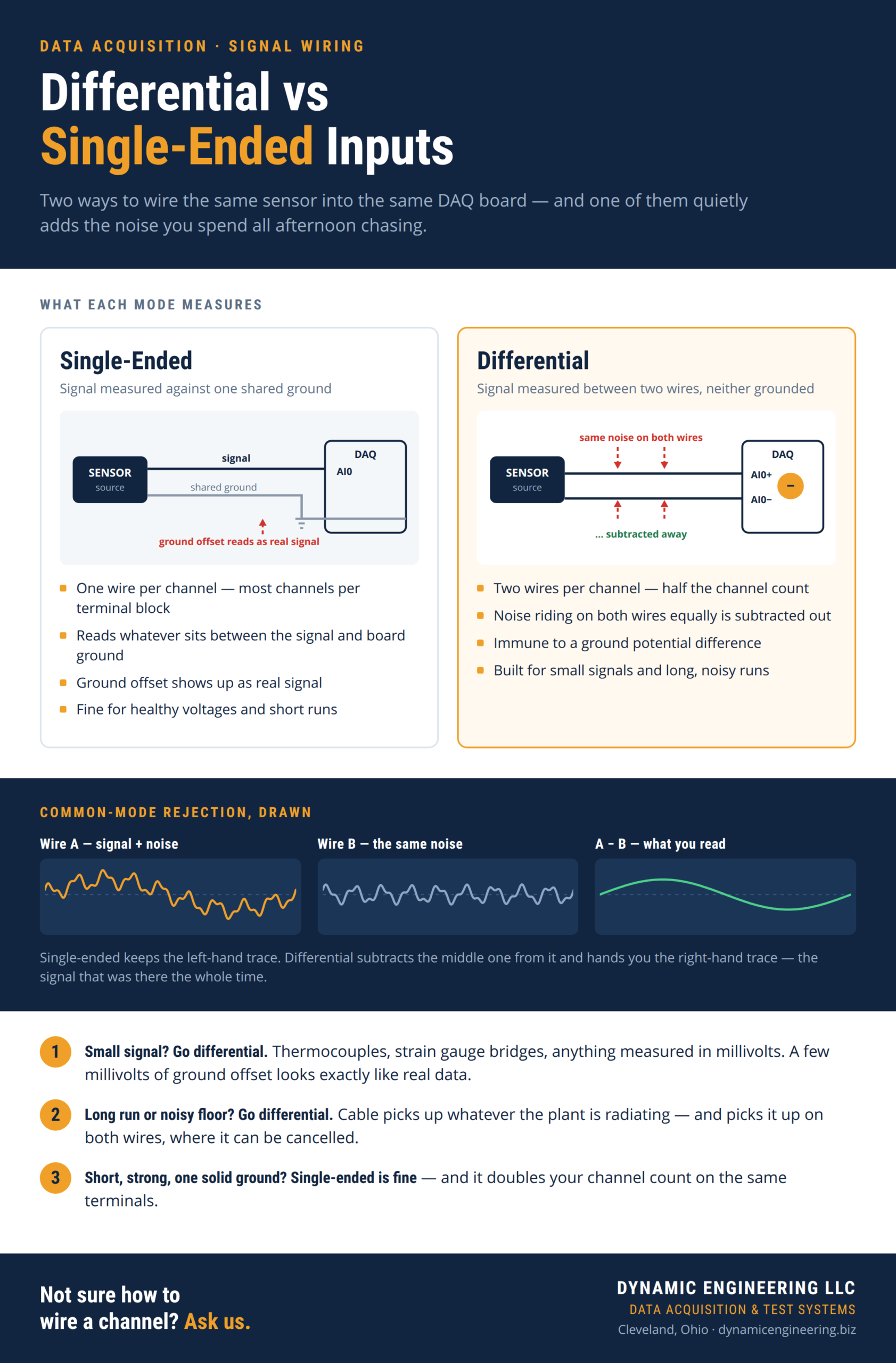
When to wire a DAQ channel differential, when single-ended is fine, and why the wrong choice buries a good signal in noise. Read more
-
Sampling Rate and the Nyquist Rule: How Fast Is Fast Enough?
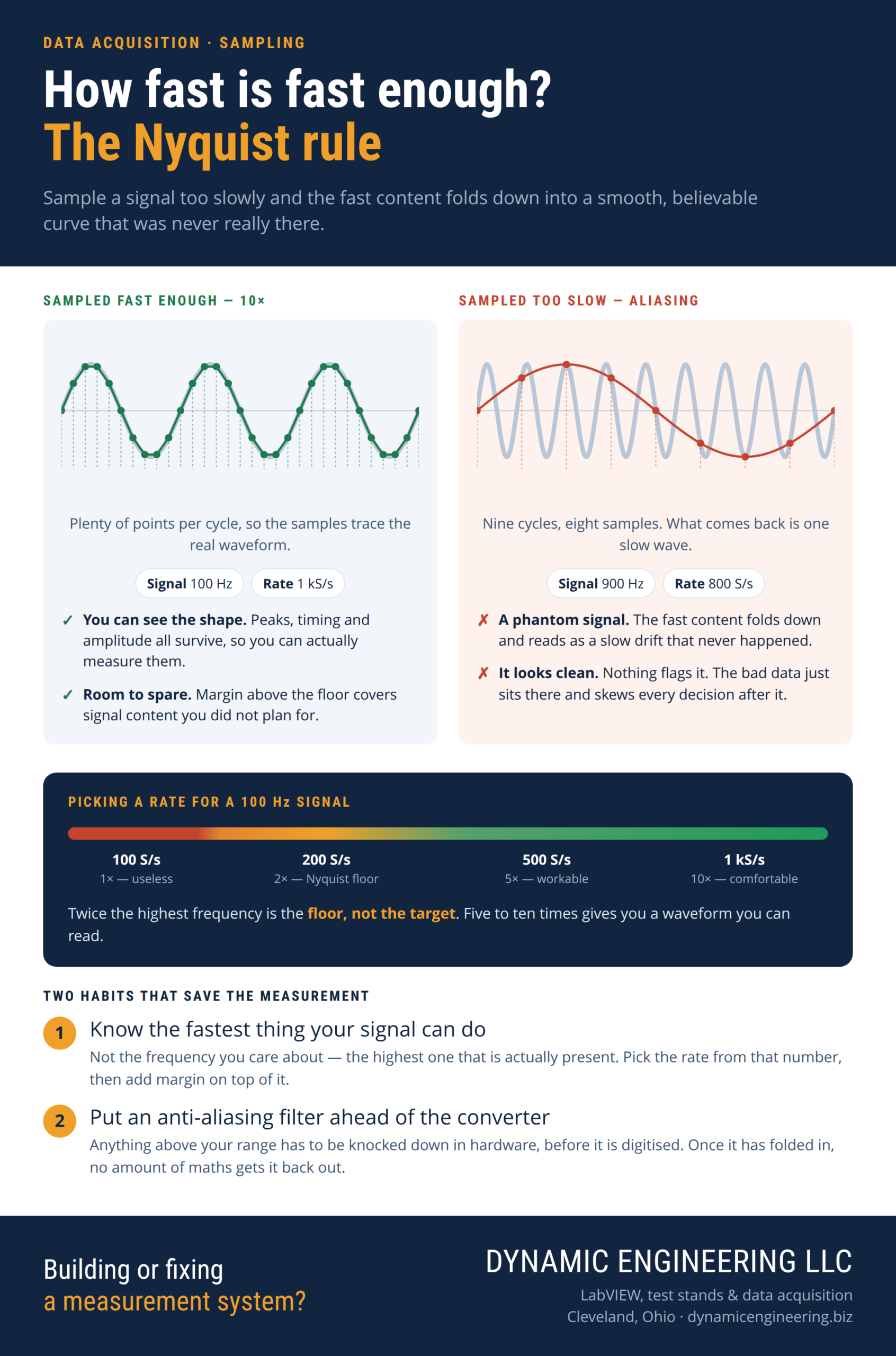
By Joseph “Joe” Zarycki Here’s a question that trips up a lot of good measurements. How fast do you need to sample a signal to capture it right? The Nyquist rule has the answer. Sample too slow and your data lies to you. It looks clean on the screen. It’s just wrong. The Nyquist rule… Read more