Category: Test Automation
-
Who’s Going to Run This Thing?
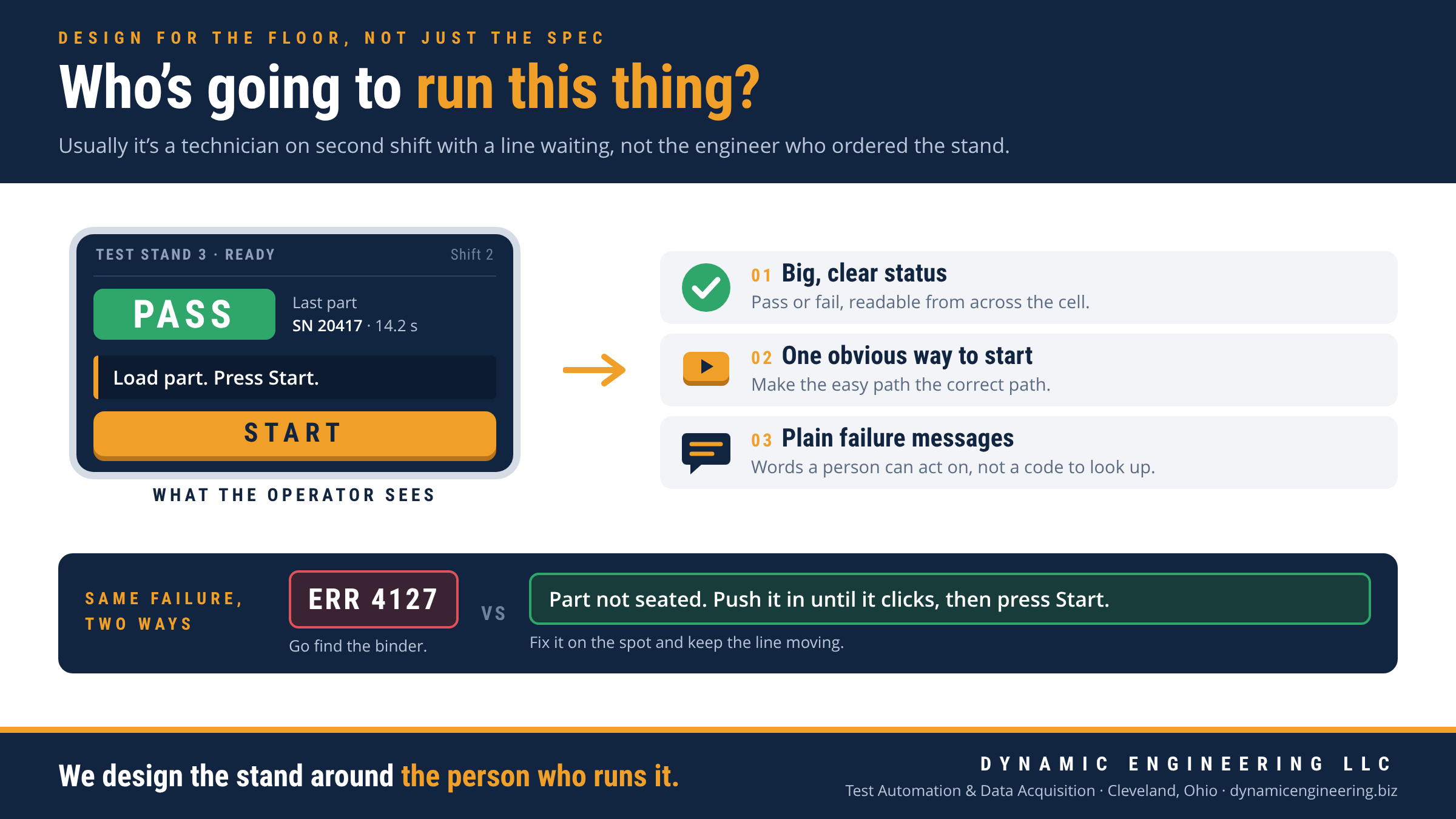
A great test stand design is one your operators can run without a manual. Here is how we design for the person on the floor, not just the spec. Read more
-
Why the Job Isn’t Done When the Test Stand Ships
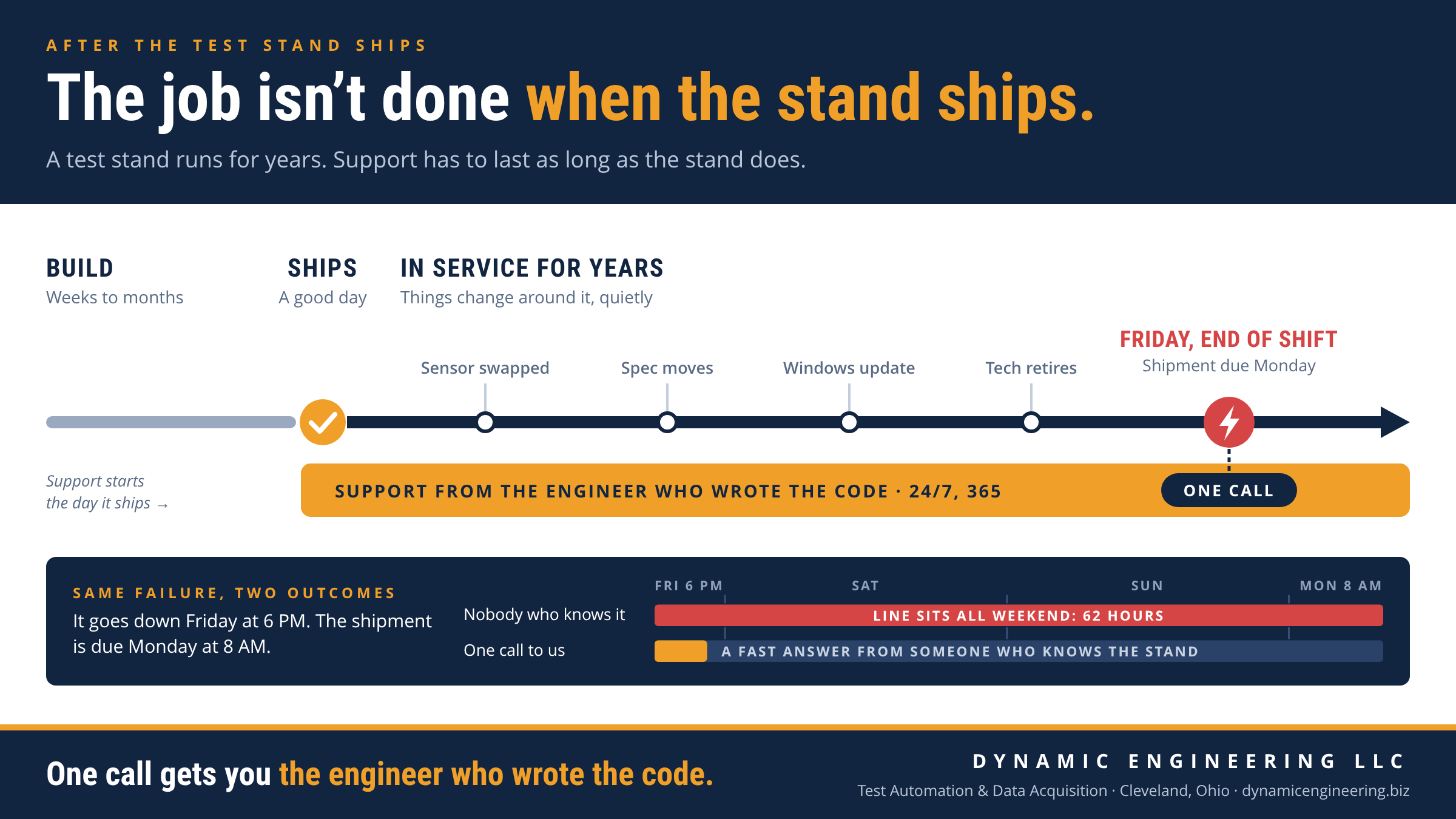
A test stand that goes down on a Friday night needs someone who answers. Here is why test stand support is part of the job, not an add-on. Read more
-
Why We Start With Your Goal, Not Your Spec
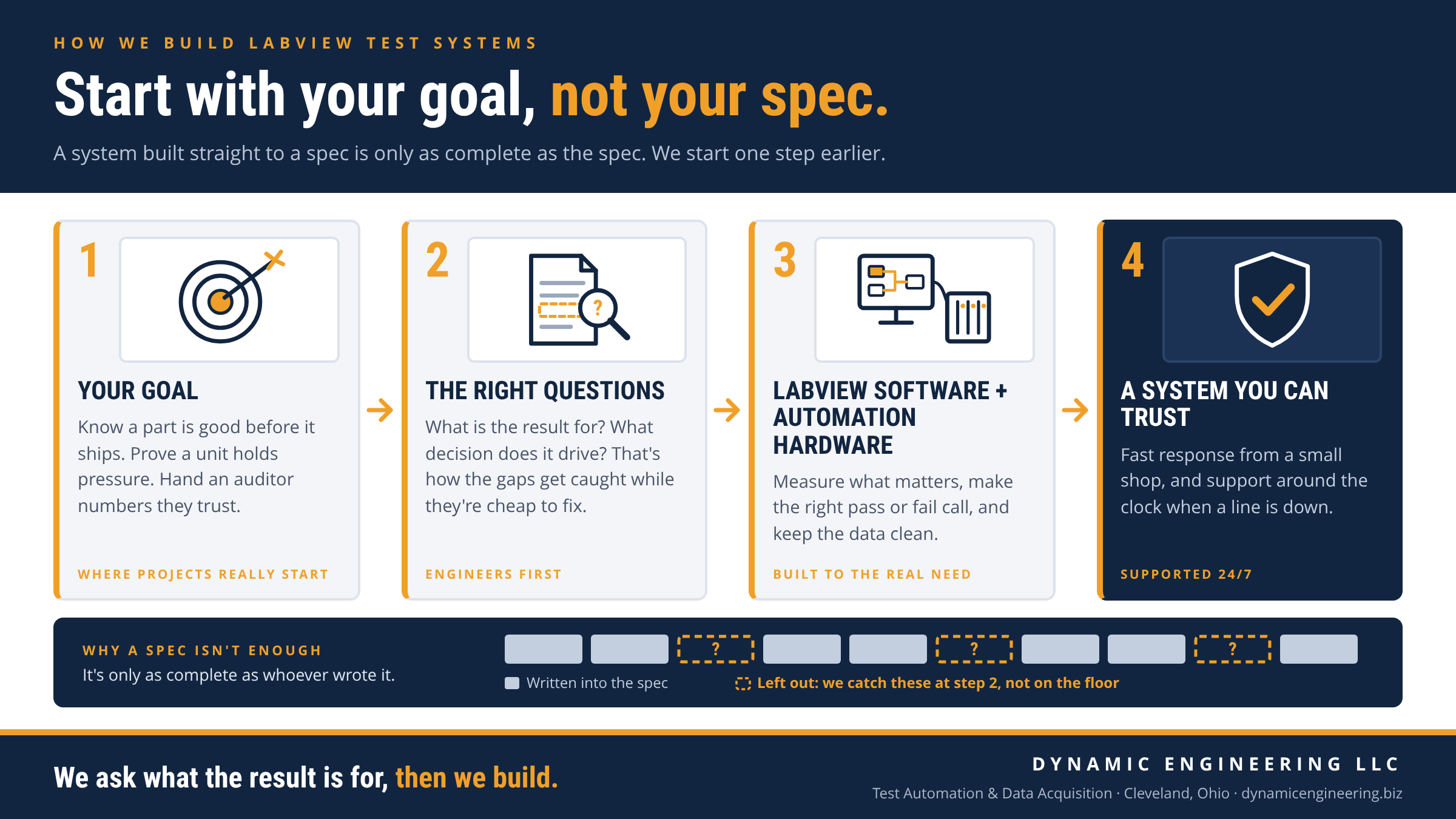
Most LabVIEW test systems start with a goal, not a tidy spec. Here is how we figure out what your system actually needs to do before we build it. Read more
-
What Is This Number For? The First Question on Any Test System
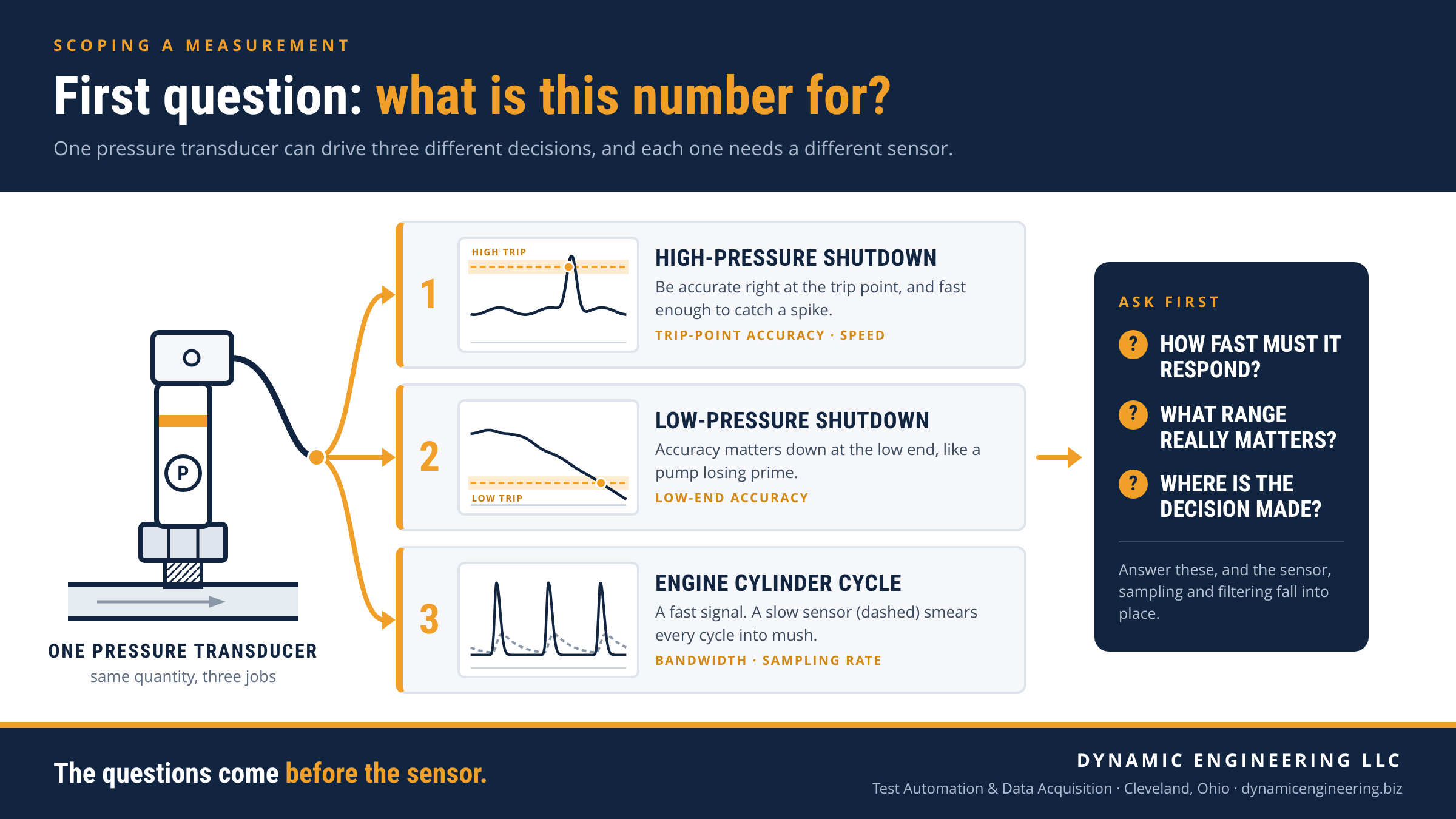
Before we pick a sensor, we ask what the number is for and how fast it needs to respond. A LabVIEW consultant in Cleveland on scoping a measurement. Read more
-
What a Good Test Stand Handoff Should Include
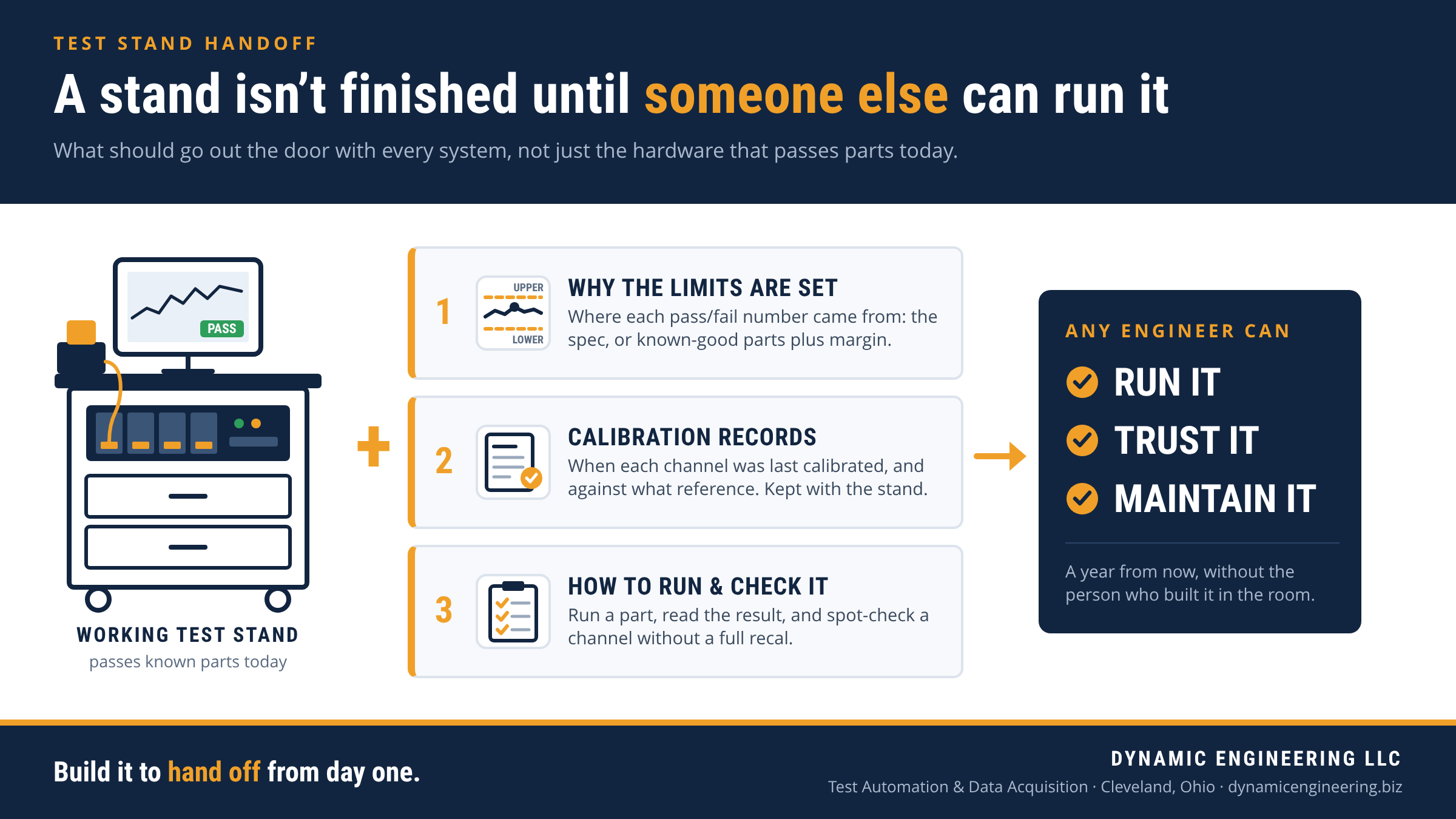
A finished test stand is one the next person can run, trust, and maintain. Here’s what a test automation engineer in Cleveland ships with every system. Read more
-
Why When You Measure Matters as Much as What You Measure
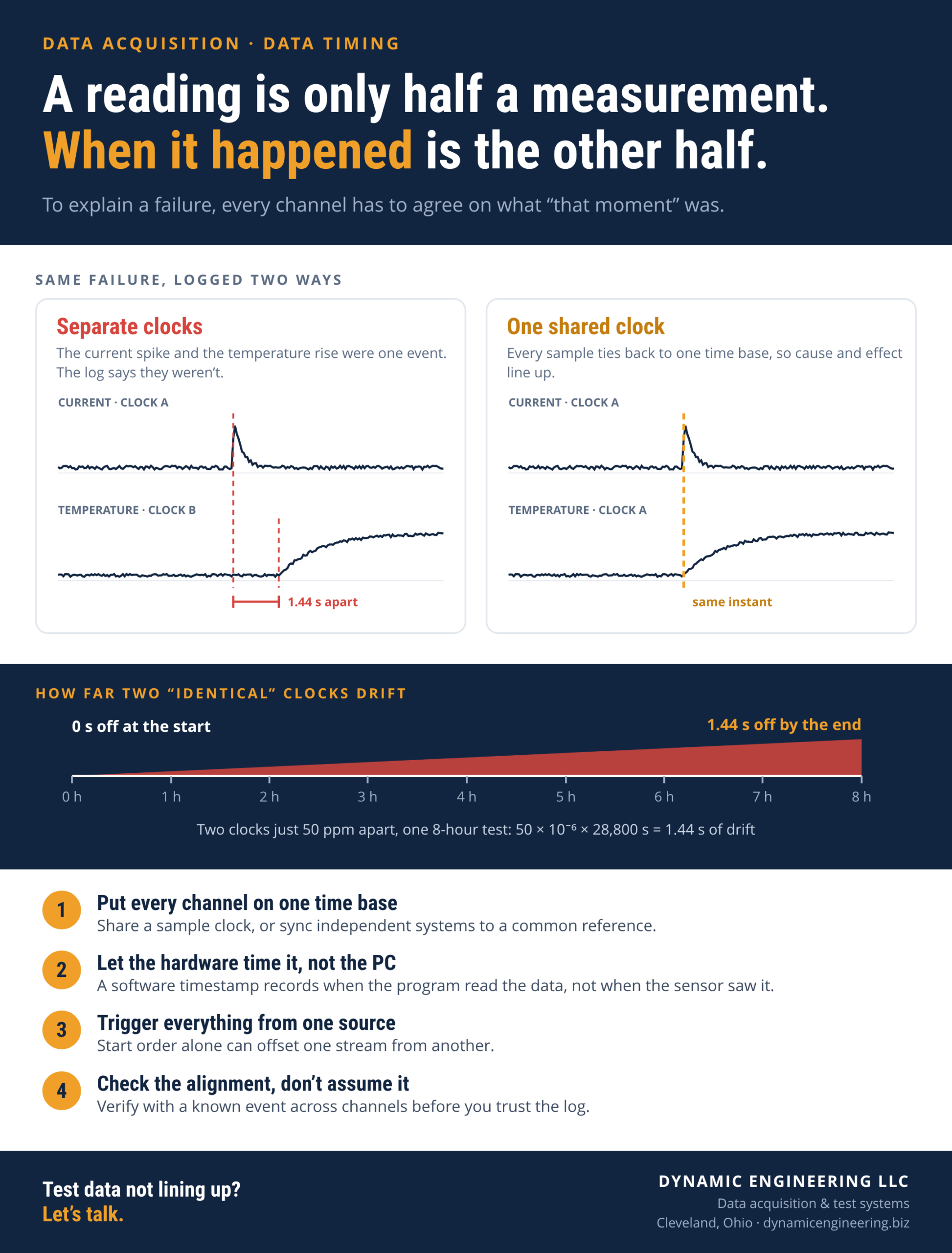
A clean reading at the wrong moment can still give you the wrong answer. Why data timing and alignment decide whether a test result means anything. Read more
-
Turning a Vague Test Request Into Real Pass/Fail Criteria
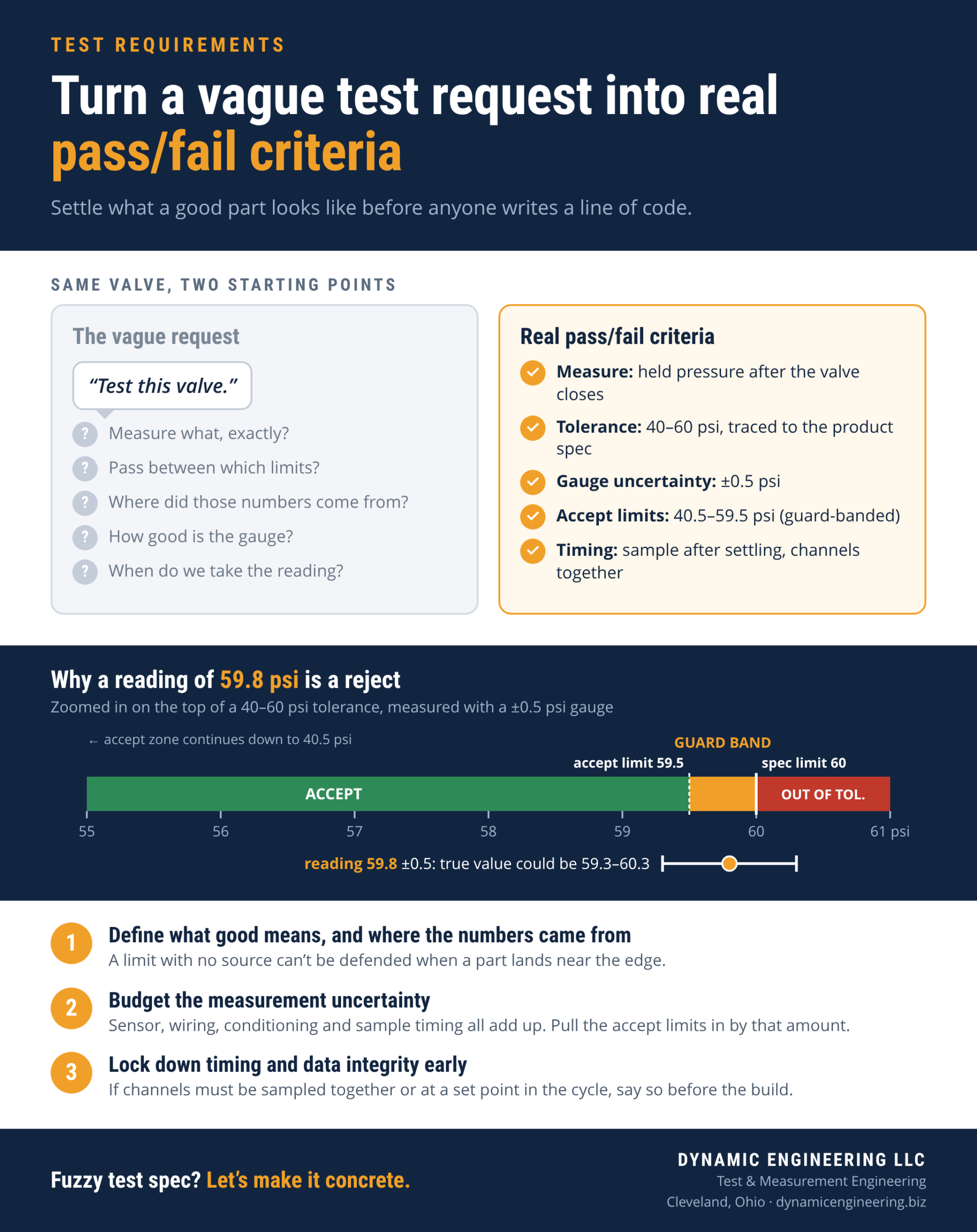
Before we write any code we pin down the pass/fail criteria. Here is how fuzzy test requirements cost you, and where measurement uncertainty fits in. Read more
-
Ground Loops: Why One Bad Ground Wrecks a Measurement
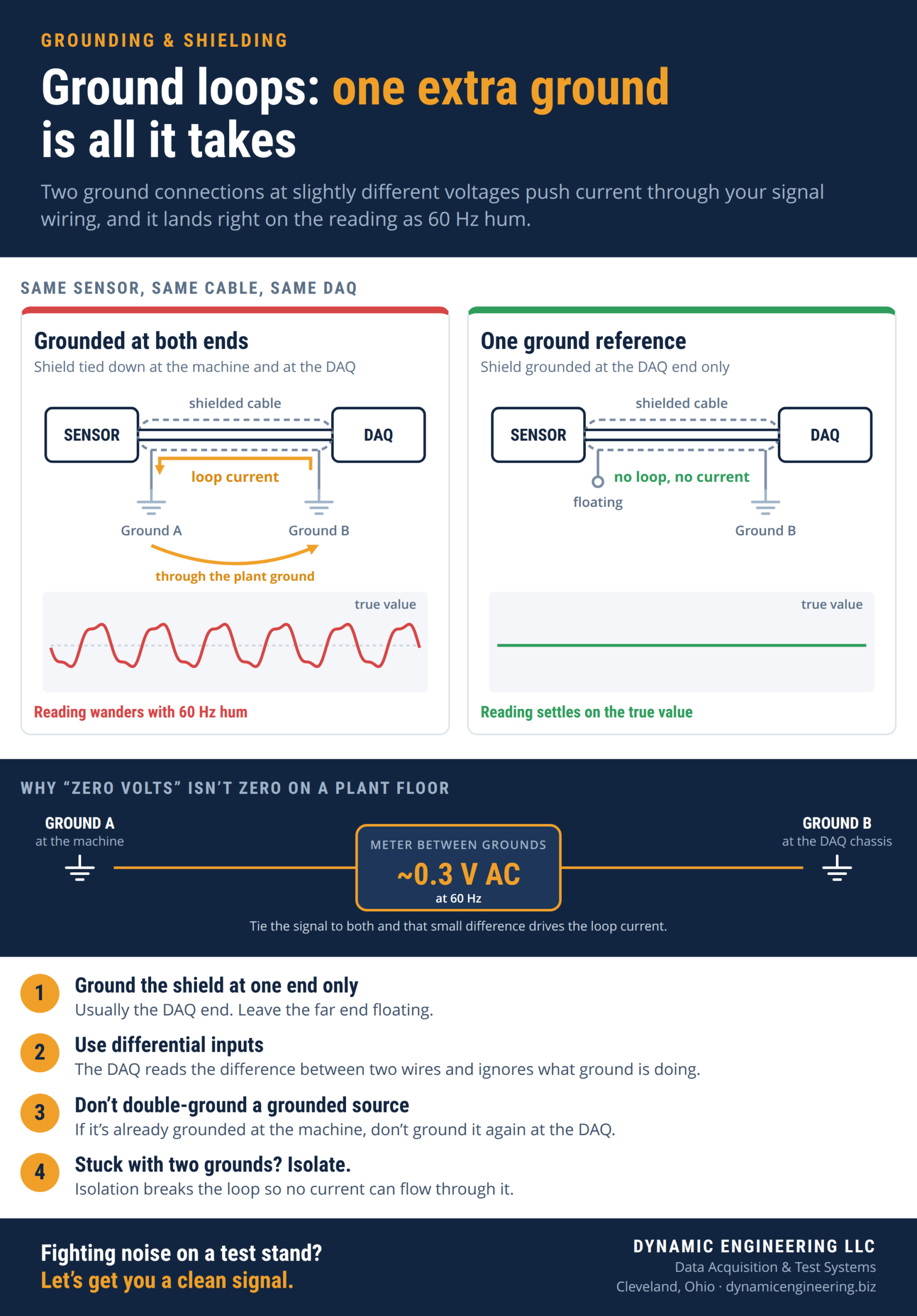
A ground loop is two ground connections at slightly different voltages, and it puts noise right on your signal. Here’s how to spot one and shut it down. Read more
-
What Signal Conditioning Actually Does Before Your DAQ Sees It
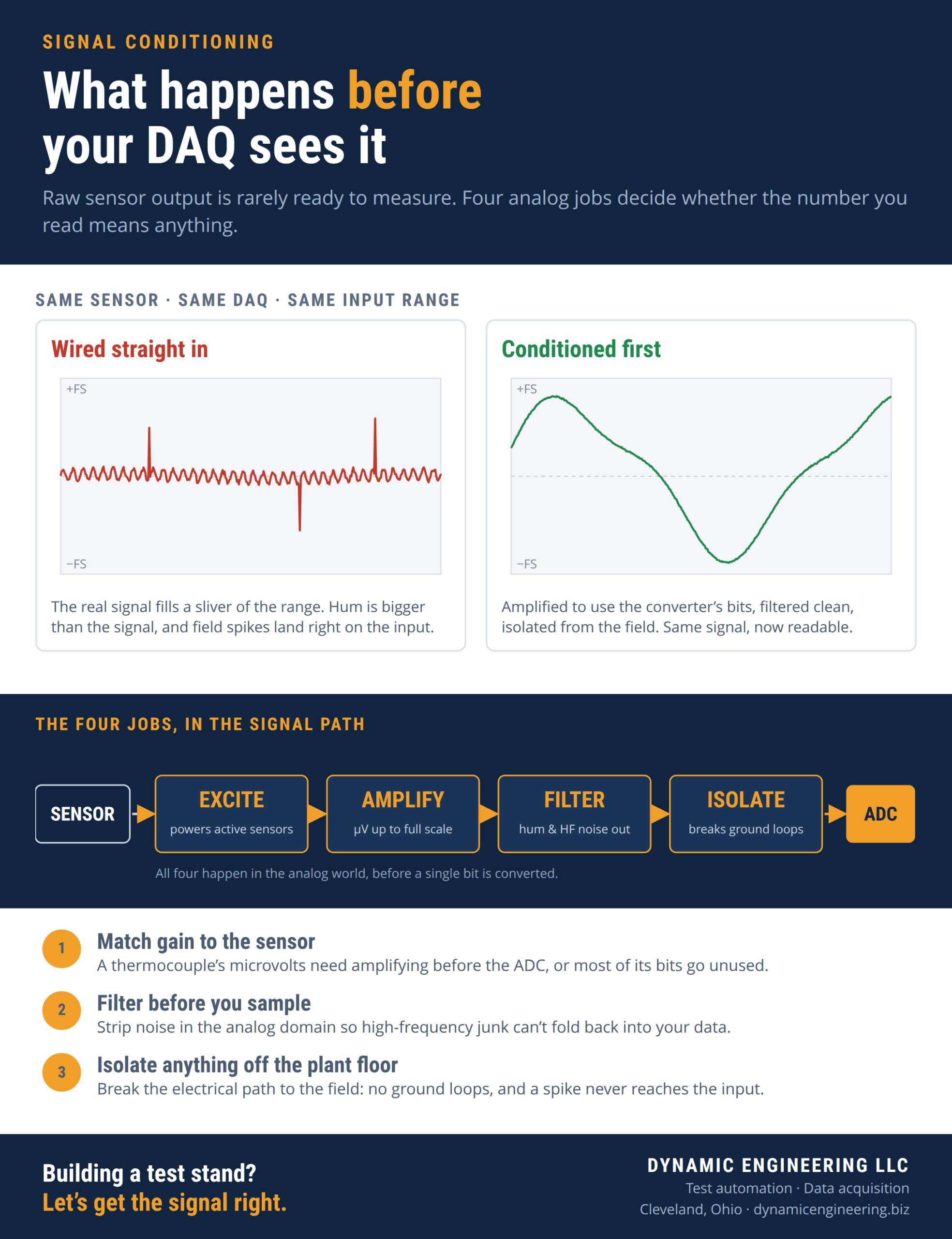
Raw sensor output is rarely ready to measure. Here is what signal conditioning does, amplify, filter, isolate and excite, before your DAQ digitizes it. Read more
-
Why a Producer Consumer Loop Keeps LabVIEW From Dropping Data
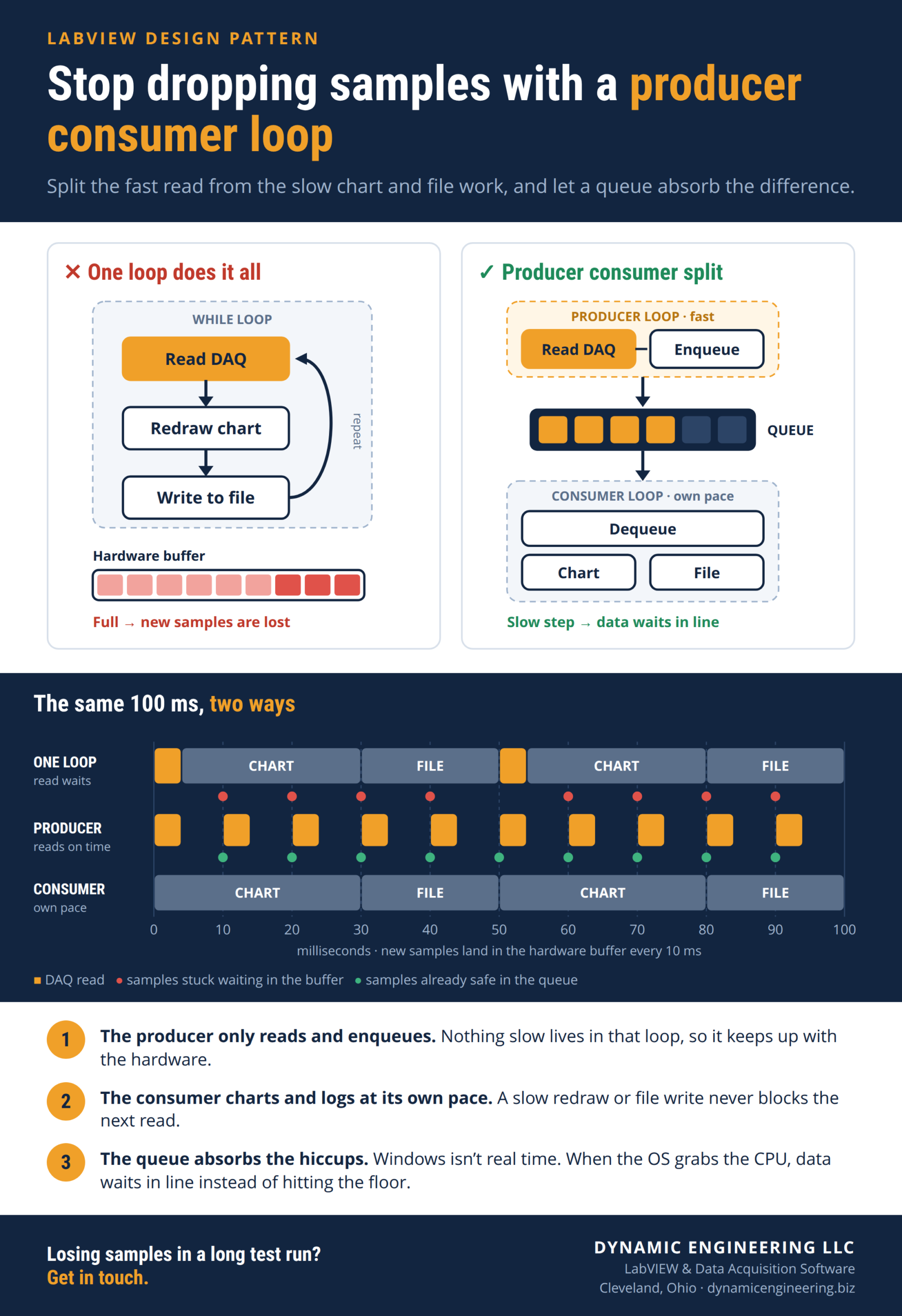
A slow chart or log should not cost you samples. Here is how a producer consumer loop in LabVIEW keeps your data acquisition from dropping data. Read more