Author: Joseph Zarycki
-
Why Thermocouples Need Cold Junction Compensation
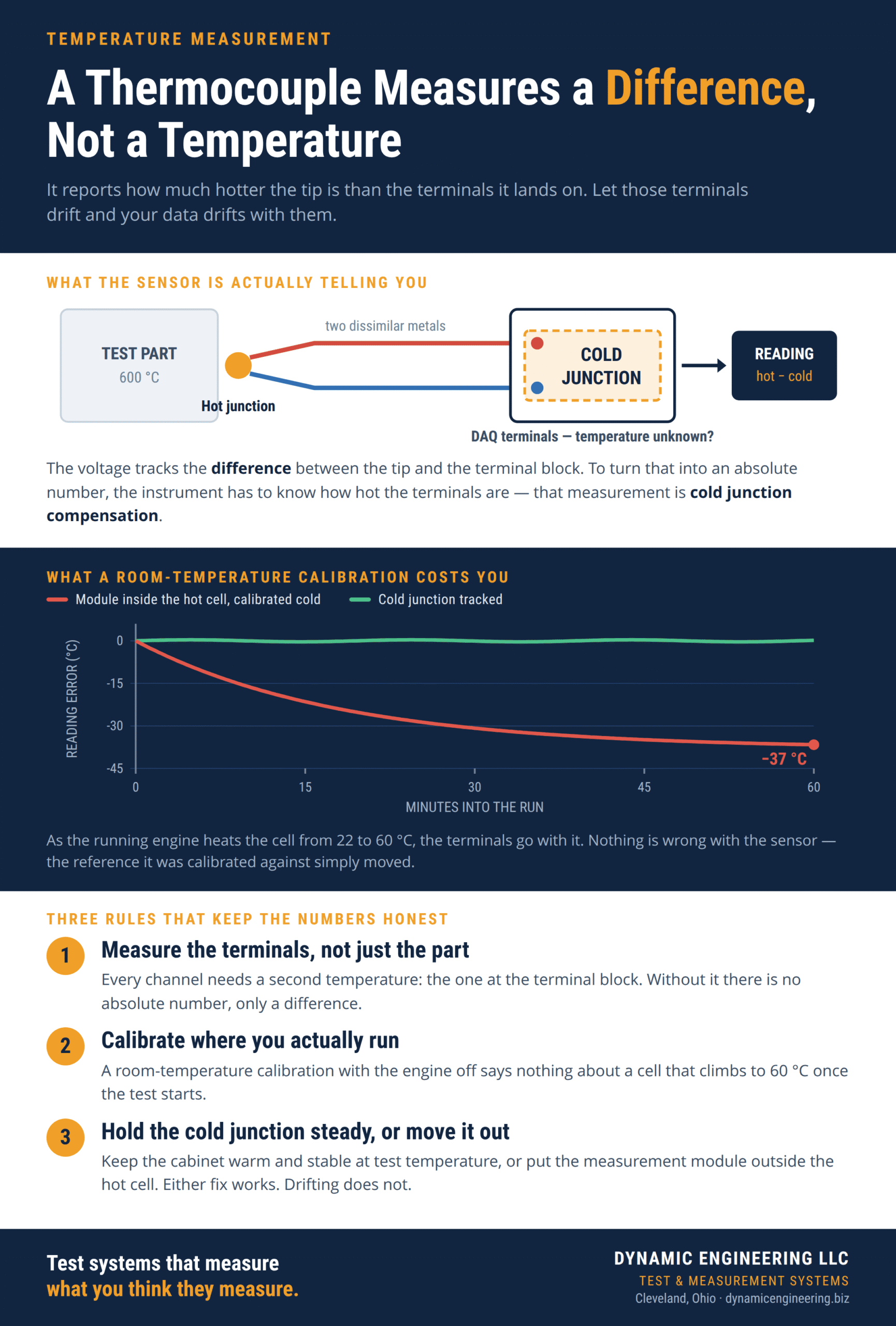
A thermocouple reads a temperature difference, not an absolute number. Here’s a real test cell story on why cold junction compensation matters. Read more
-
cRIO vs cDAQ: When to Reach for Each
If you’ve ever spec’d out a National Instruments system, you’ve hit this fork in the road. Both platforms take the same C Series modules. Both measure the same signals. So why do they cost so differently, and which one does your job actually need? The short version A cDAQ needs a computer. It’s built to… Read more
-
Differential vs Single-Ended Analog Inputs, and When It Matters
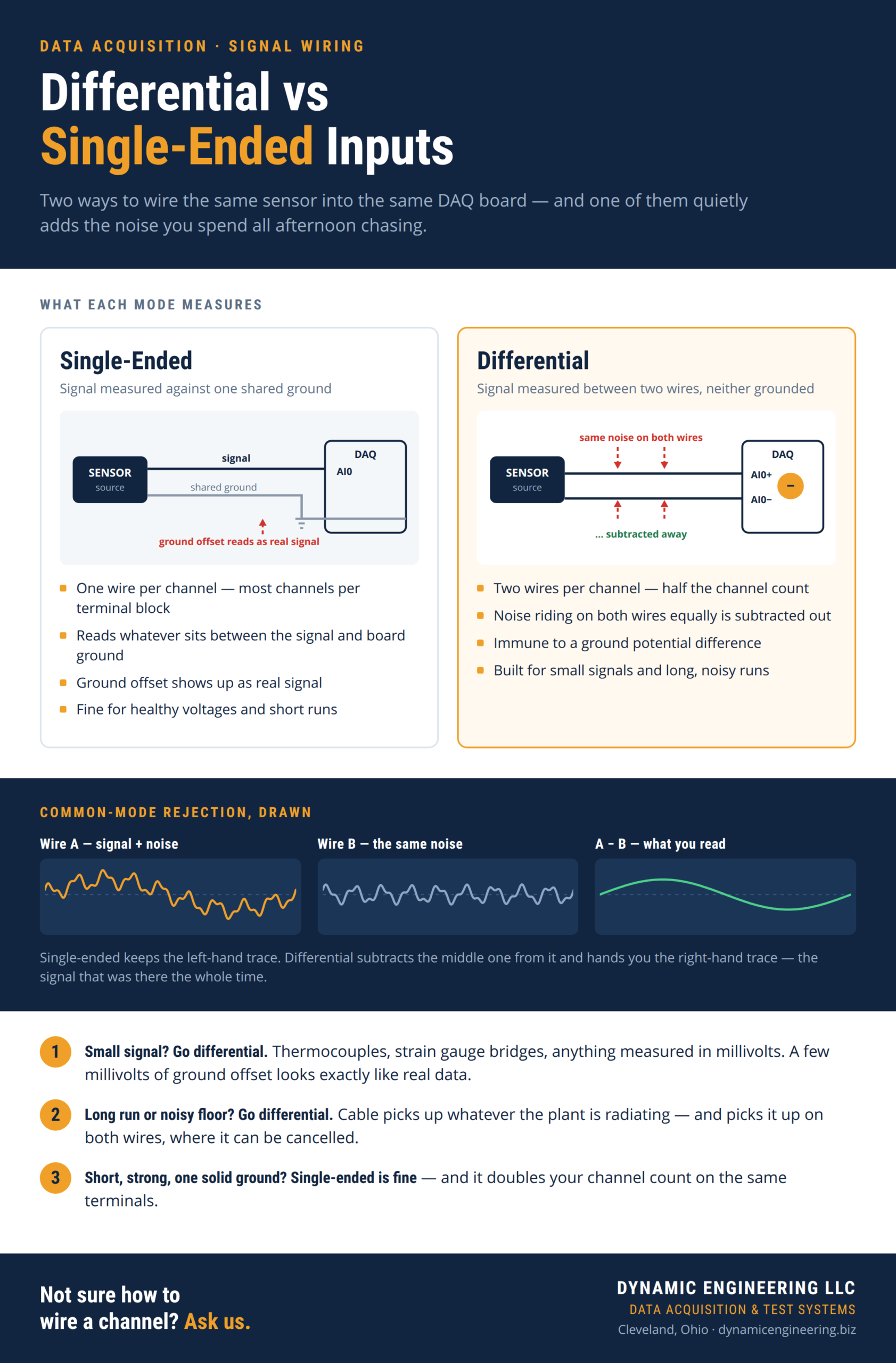
When to wire a DAQ channel differential, when single-ended is fine, and why the wrong choice buries a good signal in noise. Read more
-
Sampling Rate and the Nyquist Rule: How Fast Is Fast Enough?
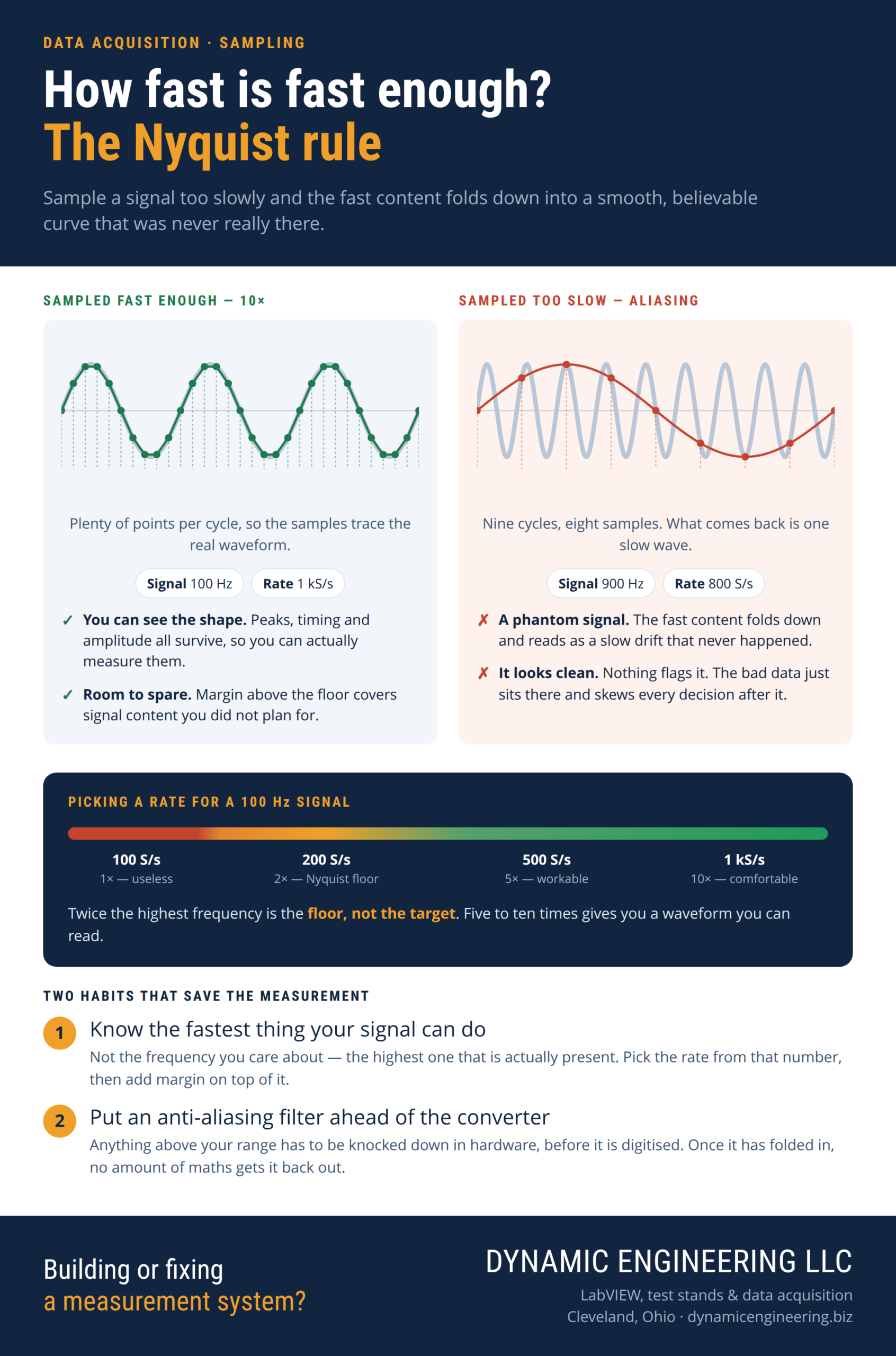
By Joseph “Joe” Zarycki Here’s a question that trips up a lot of good measurements. How fast do you need to sample a signal to capture it right? The Nyquist rule has the answer. Sample too slow and your data lies to you. It looks clean on the screen. It’s just wrong. The Nyquist rule… Read more
-
RTD vs Thermocouple: How to Pick a Temperature Sensor
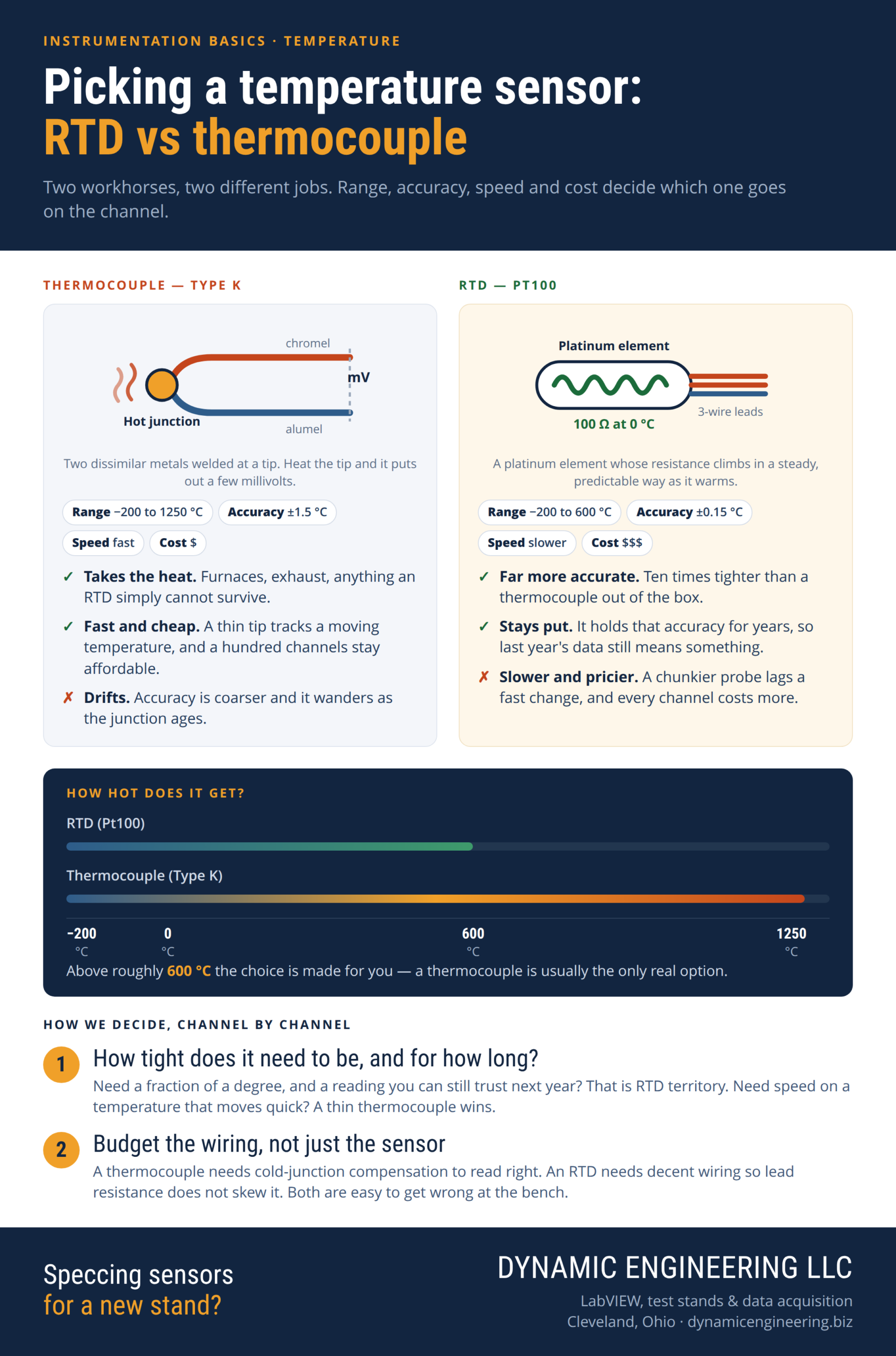
RTD vs thermocouple: a plain guide to picking the right temperature sensor by range, accuracy, speed, and cost, from Dynamic Engineering in Cleveland. Read more
-
Why Sensors Send 4 to 20 mA Instead of a Voltage
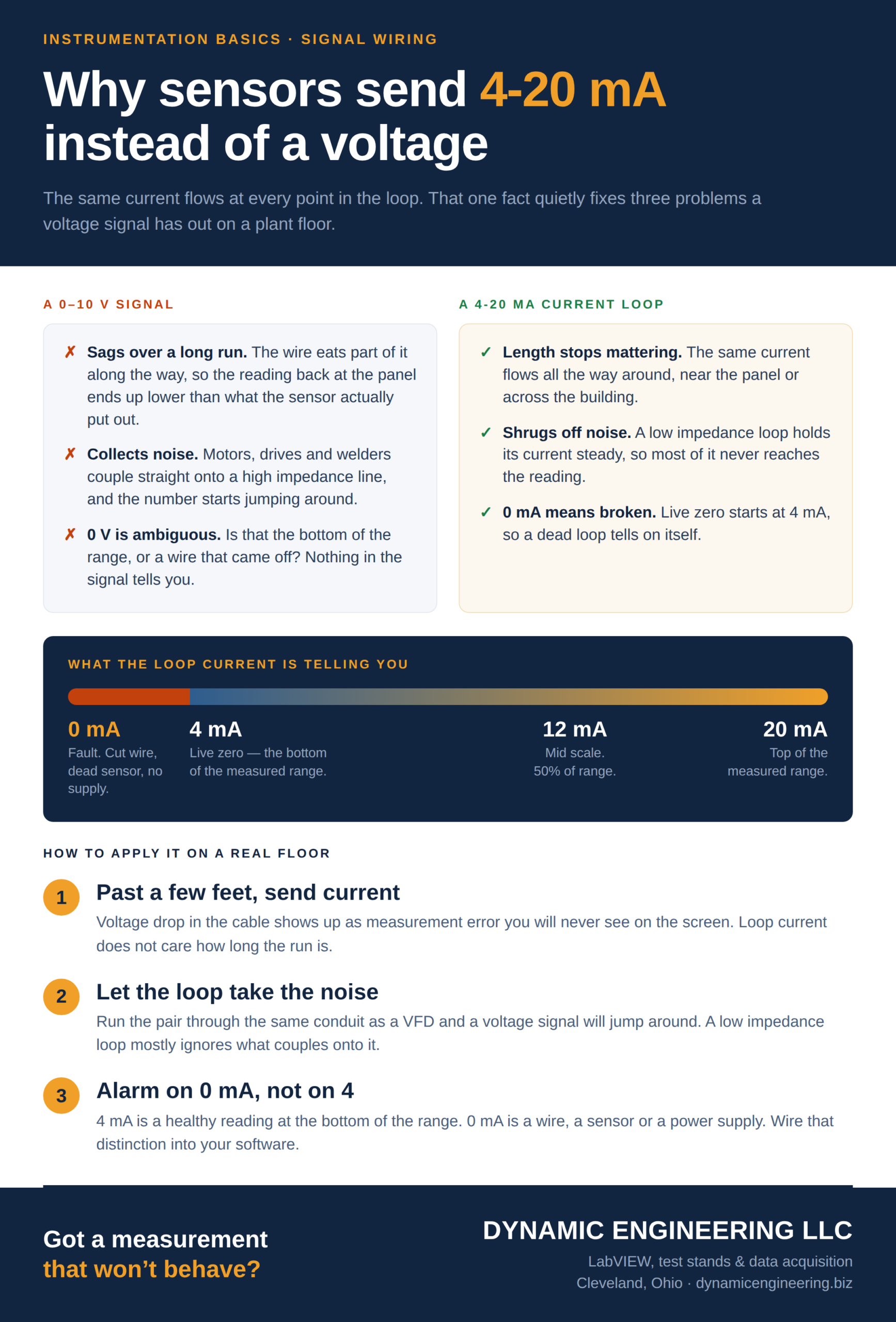
Industrial sensors almost always send a 4-20 mA current loop instead of a voltage. It holds up over long cable runs, ignores noise from motors and drives, and a reading of 0 mA tells you a wire is broken. Read more
-
Nigel Is a Fast Draftsman, Not an Engineer
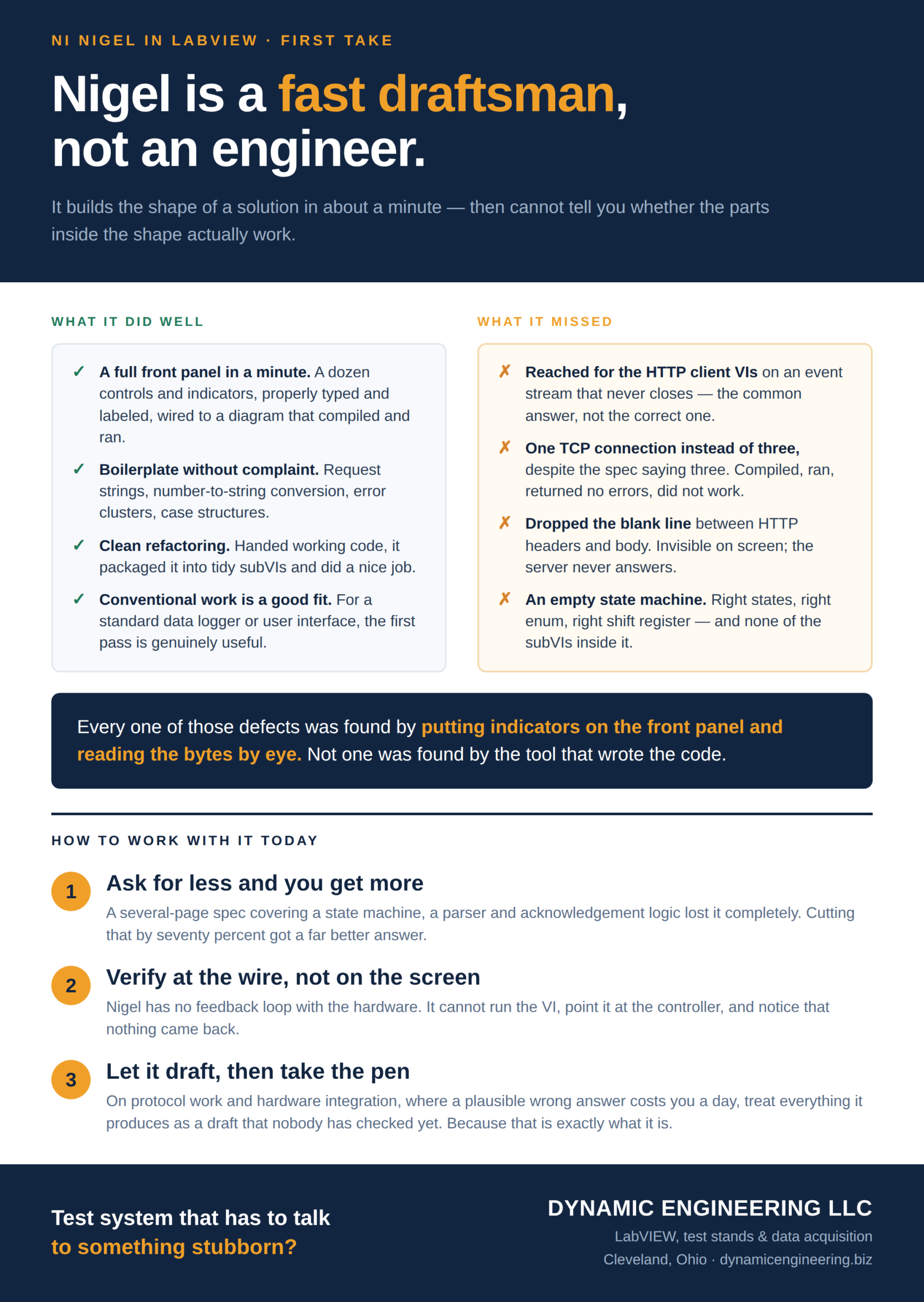
NI Nigel writes LabVIEW code fast, but it cannot test it. An honest first take after using NI Nigel on a real HTTPS controller project. Read more
-
Scaling a Test Lab: From One Working Bench to Many Identical Stations
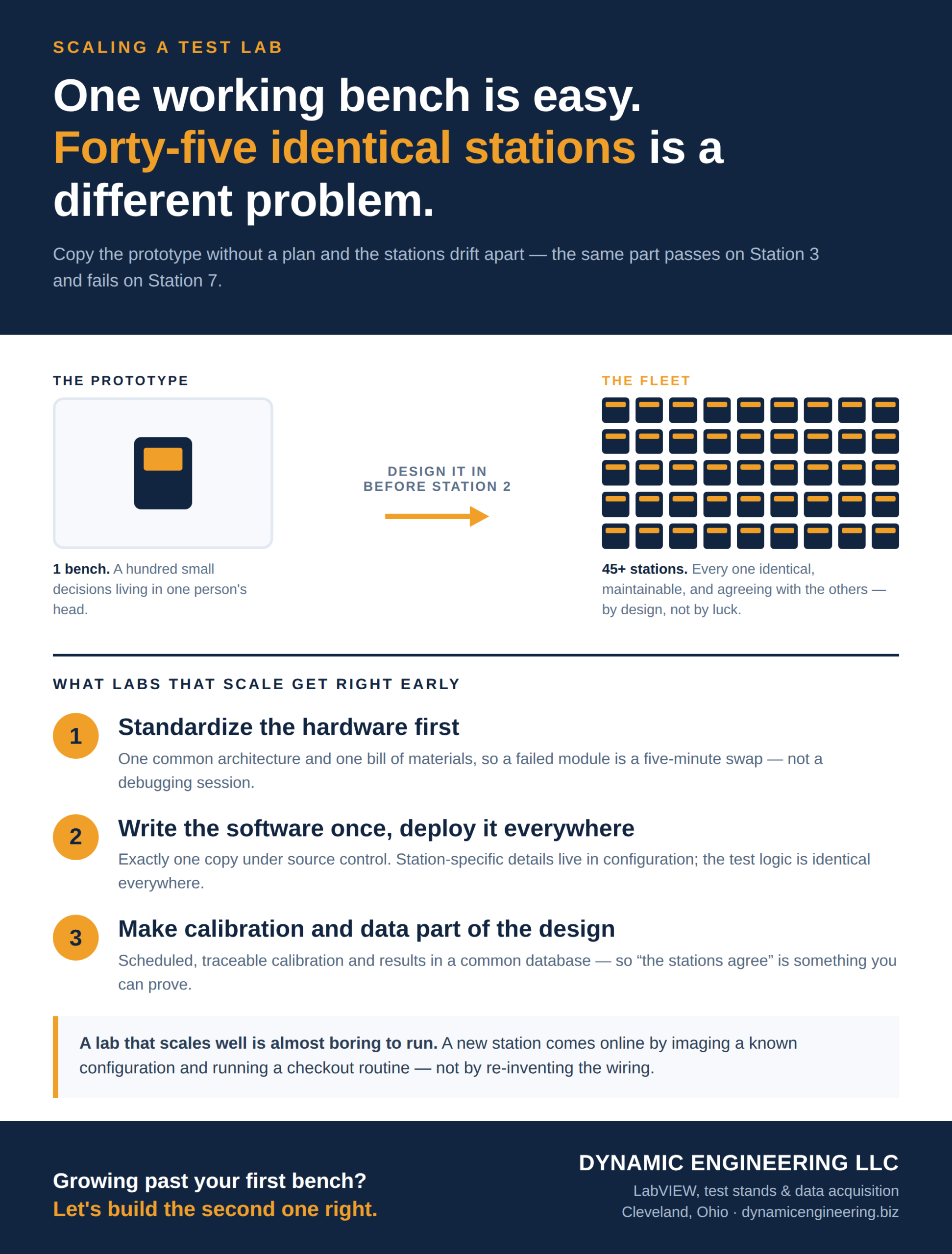
The first bench is the easy part. An engineer on your team builds a proof-of-concept test rig on a workbench in the corner. It reads the right sensors, drives the part through its sequence, and spits out a pass or fail. Everyone is happy. Then production planning does the math on takt time and volume,… Read more
-
When Human Inspectors Can’t Keep Up: A Quick Primer on Automated Visual Inspection
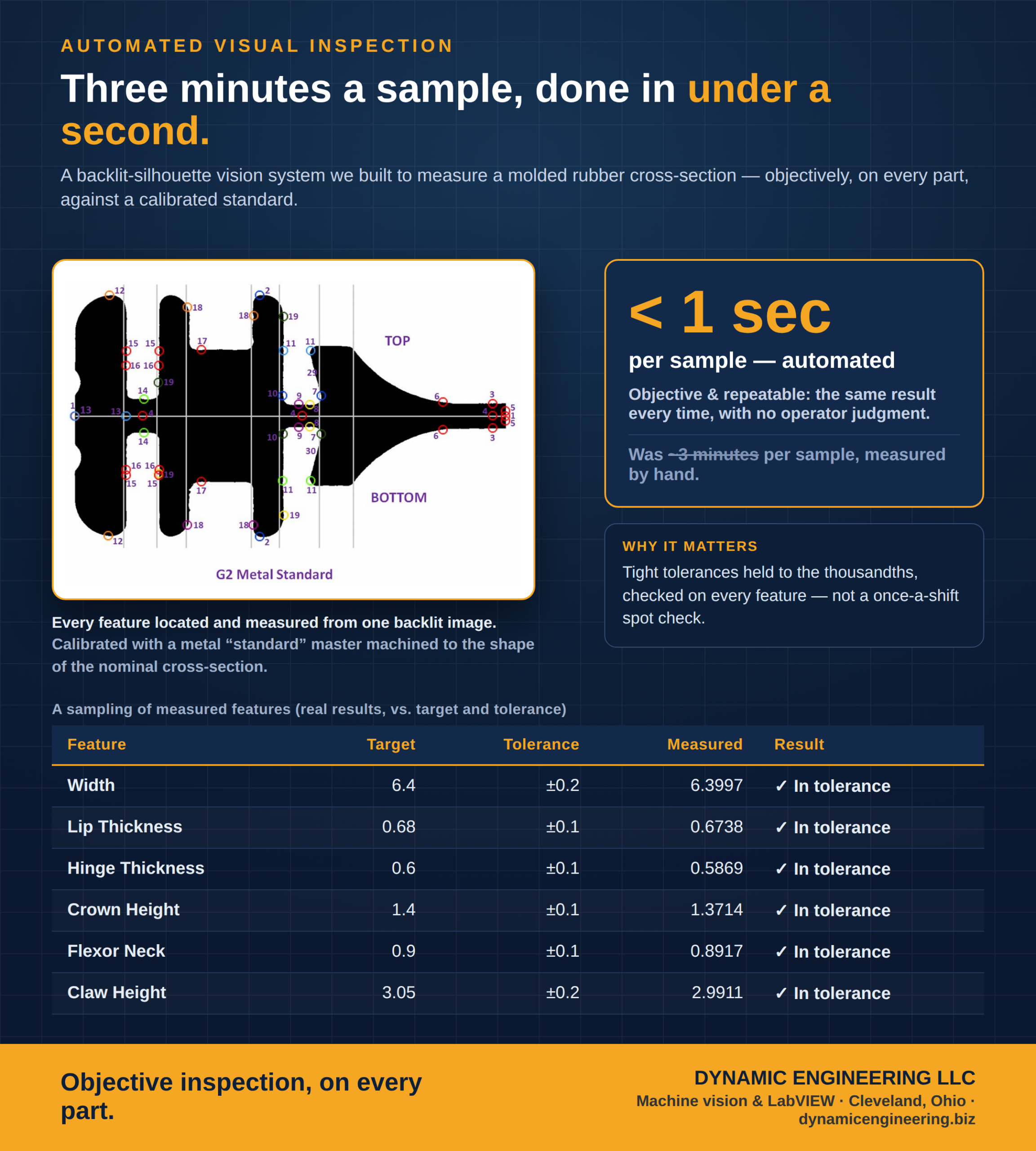
Visual inspection is one of the first things to break as a line speeds up. A skilled inspector can catch a lot, but people blink, tire, disagree with each other, and can only look at so many parts per minute. When throughput climbs or a defect absolutely cannot ship, “have someone watch for it” stops… Read more
-
Five Signs Your Test Stand Is About to Cost You a Production Day
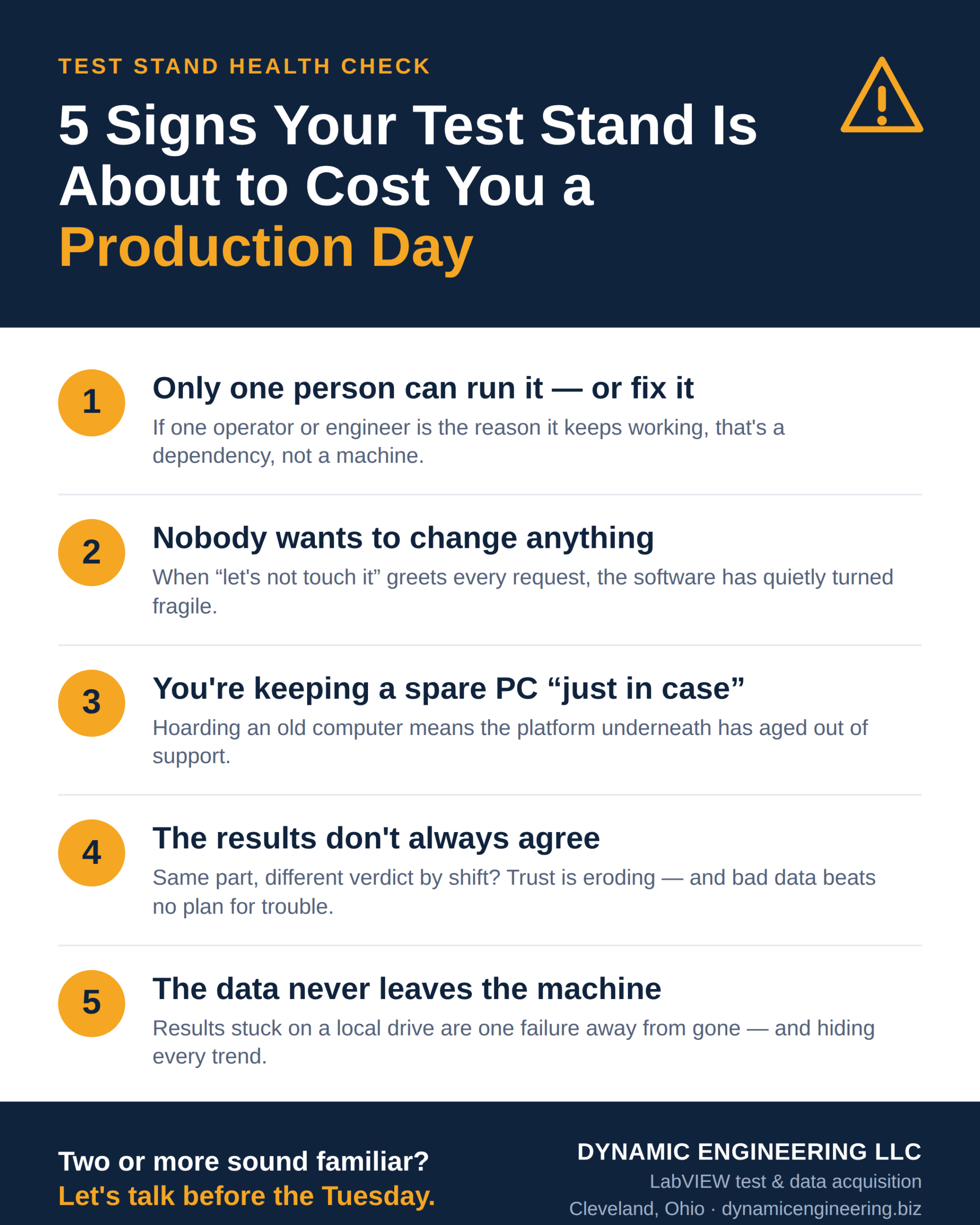
A test stand rarely fails on a schedule. It fails on a Tuesday, in the middle of a run, when you can least afford it. The good news is that most of them warn you first — and good test stand automation in Ohio starts with reading those warnings early. Here are five signs we’ve… Read more